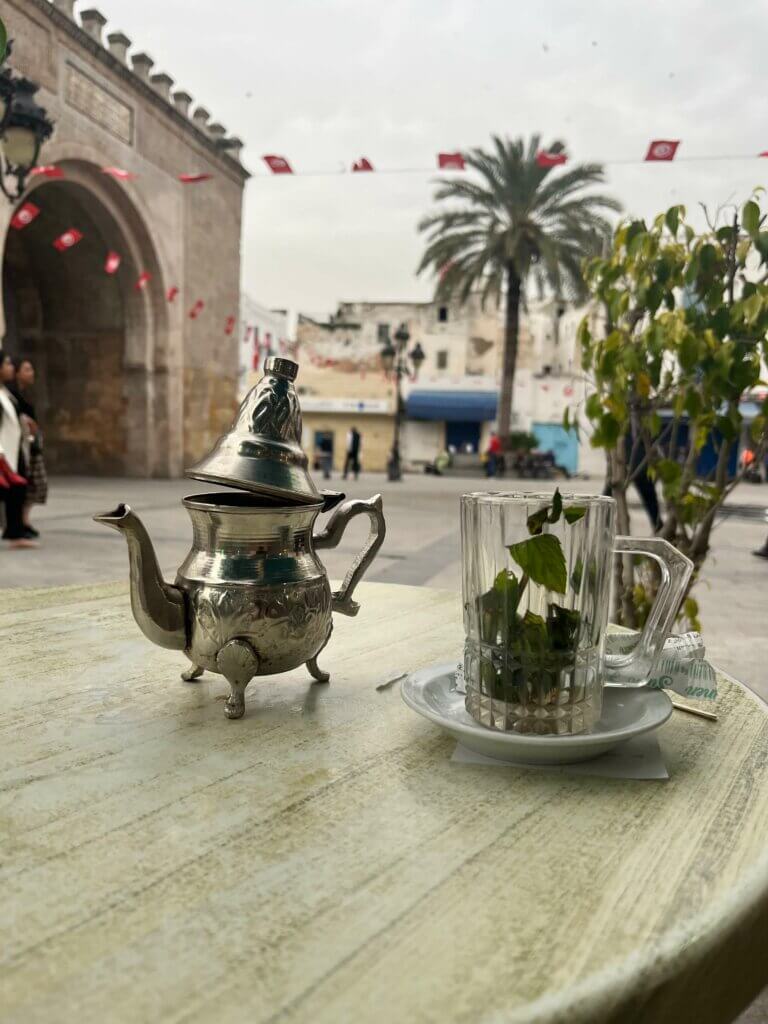
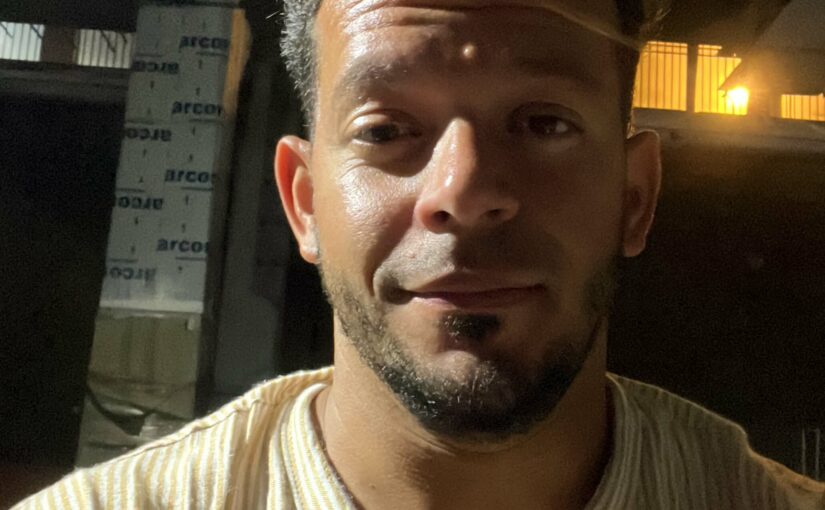
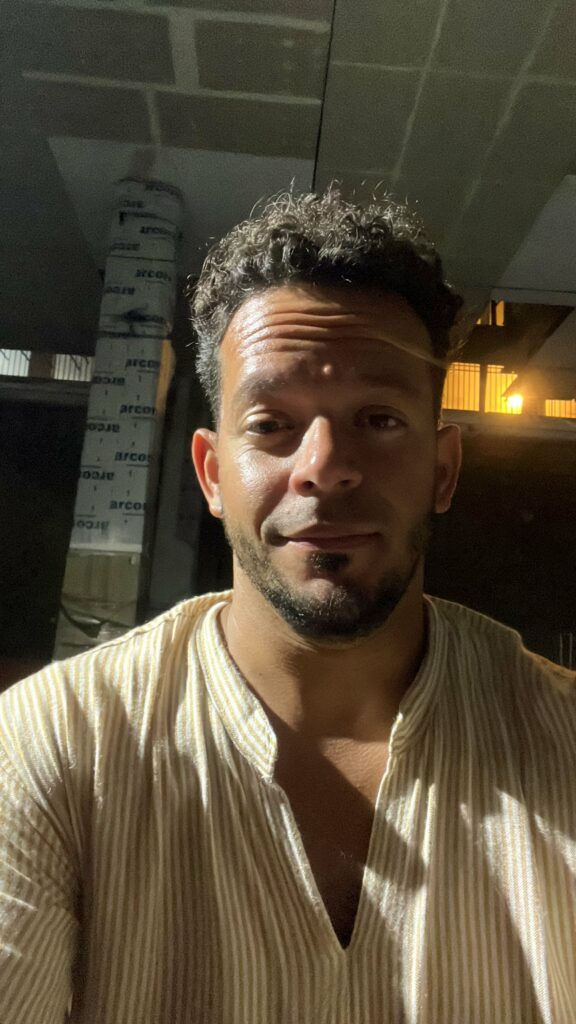
These are the words of my taxi driver in Tunis. Taxi drivers are a great source of inspiration.
Tunisians are kind and generous. On the street they seem a bit more serious than Egyptians who are joking in any possible situation. I always wonder what events in the history shaped the collective mood of a nation. Whether it is winning/losing a war, or for example works of literature or art that influences everyone.
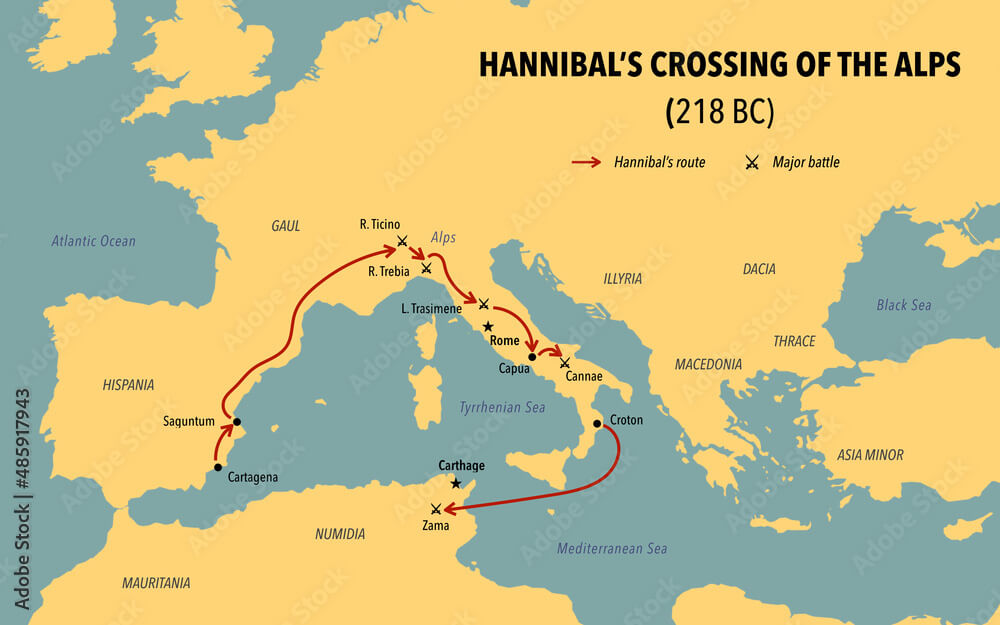
I visited the Punic and Roman ruins of Carthage, a city of big history that was completely destroyed by the romans. Before that destruction, its general Hannibal marched his army through Spain, crossed the Alps, and spent fifteen years fighting and winning the worst lost battles of the Roman Empire. He marched from the north to Cannae, further than Rome. He did not march to Rome. Nobody knows why.
The problem is that we may never know, because the history that survived was written exclusively by the Romans, who later burned Carthage’s libraries with all the books in Carthage.
Similar to civilisations, unless we document things ourself, what will remain of us is what the others tell about us. I guess this is one reason I am writing here. But also interesting is to imagine, what others would tell about your “civilisation” when you are gone. Probably the truth is distributed between what you think of yourself and what the others think of you. And as. They say, each of us exists differently in every mind that thinks of us. The versions of you that live in your mother’s perception, in a colleague’s, in a stranger’s who watched you once on the metro are not the same person. And none of them is actually you. Neither is what you think is you! We are probably the overlapping region of several Venn diagrams: some of what we believe about ourselves, some of what the others perceive, and what remains true beyond both. I spent a lot of time alone in Tunisia, reflecting and sorting out my thoughts about my life. On the other hand, I have had a few great conversations, specially with Amel, the English language university professor that definitely enriched my perspective on Tunisian lives as well as mine.
Amel introduced me to many other beautiful souls, Hajer, Omar, Asma and Malak. They were my window into the Tunisian society with their projects and their dreams. They nicely “kidnapped me” after midnight for a late snack at 2:30 am. I have now officially made new friends in Tunisia and will be back one day.
You are not the same person at the time of planning and the time of doing. You book your holidays with a certain need that might not be there when your trip starts. A core difference between a backpacker and a regular traveler is the versatility adapted to introspection. Plans force you to comply, so you serve the trip instead of the trip serving you. Maybe this doesn’t apply to people with less temperament who maintain a constant state of being (genau). I came to Tunisia after night shifts in the emergency department with a few very sick patients. I needed to eat, sleep and dance.
Living in the developed world rewires you. You get used to the fact that actions have predictable consequences. Do this, get that. The Middle East doesn’t work like this. And that’s its magic. No matter what you do, you cannot predict what happens next. On my first night, past midnight, a taxi driver was taking me home. As it always does with Tunisian men, the conversation found its way to football, we have a long rivalry between Egyptian and Tunisian clubs. I asked, almost casually, whether any good matches were coming up. One of the strongest derbies in the country was happening the next day. I asked about tickets. He told me it is probably sold out, and then added: you could also just show up at the stadium and tell them you’re Egyptian. I didn’t think that could possibly work. The next afternoon I approached the stadium to find it ringed by police checkpoints. At the first one, I said I had no ticket, that I was an Egyptian tourist. The officer looked at me and said: you have no chance, but go ahead and try. Three years ago I would have turned around at the first refusal and gone home. But I had learned something.
Flashback (like in the movies): In Dubai, my cousin, a young professor of finance, had once talked our way into a fully booked museum. The tickets were sold out, the desk lady said so immediately, and I was already turning to go. But he simply stayed. He explained that we had come from other continents and that this was spontaneous, that we had no chance to wait. He showed zero intention of leaving without a ticket. And then, somehow, the lady did something on her computer and let us in. (End of flashback, heheh)
That memory came back to me at the second checkpoint, where three officers refused me, but one who appeared to be their superior said: actually, why not? Go and try. Tell them you’re Egyptian. So I did. I went to the gate and told the same story one more time. They pointed me toward a man who looked like a mafia boss, talking on the phone, bossy presence, and people slightly lowered their heads when they talked to him. He listened and nodded, and that nod was my ticket to the game. It was a full 90 minutes of songs, noise, and action. One of the highlights of the trip. And I walked out having learned something I’m still carrying: always negotiate. Even when you think you don’t need to.
I was ironing my shirt in a mediocre hotel in Tunis, thinking about this trip, about the choices I make when I travel, and I realized I consistently choose the unorthodox. Because I want unusual experiences. Experiences tailored to my interests. In a world where we increasingly have less originality, fewer true individual thoughts and more generalized „woke“, very few people have their “special sauce.” Traveling is great for collecting ingredients for your special sauce of personality. The strangeness of the combination you gather from different places is the point. We don’t invent. We shuffle. Concepts, words, materials, feelings. We rearrange the universe’s existing inventory and call it creation, and we claim it for ourselves. In Tunisia, I found more spices for my sauce.
You would think that our world is immune to certain things by now. Then some events happen where you see the bad guys unapologetically, shamelessly, & loudly challenge what we thought to have morally agreed upon regardless of our multitude of differences. What is more puzzling is how some previously loud voices suddenly turn silent, in a display of moral incoherence, which to me is immoral. Like the German national football team (and many supporters) taking a stance against the World Cup in Qatar contesting about human rights while remaining forever silent when it comes to the Gaza-issue. Most of us are morally naked. This is somehow my answer to the question “Why are you going to the United States, while Trump is the president?” A 10-day trip, mainly to attend my friend Amr’s wedding in Boston. Amr is a bright Egyptian doctor that went to the States to get his PhD and recently finished his medical residency and training as an epileptologist, which is a few things we have in common. I thought I would combine the trip with a short visit to Miami, which would be my second time after my lovely visit in 2022.
Landing in Boston and crossing the border was a breeze. I took the public transportation to my Couchsurfing host, Steve, a 67-year-old gentleman. It has been a while since I couchsurfed, having only hosted travelers in the last few years. I was looking forward to refreshing my “traveler’s nomadic soul” and stretching my arms wide to the serendipity of the universe. As I approached Steve’s house, I found the Ukrainian and Palestinian flags hanging outside. I now knew we were up to some good conversations. Steve welcomed me into his home where he lives with his foster child and two cats. He has been fostering children for a couple of years, giving them a roof and providing for them in his retirement. Steve insisted that I use his bedroom while he slept on the couch. A remarkable generosity.
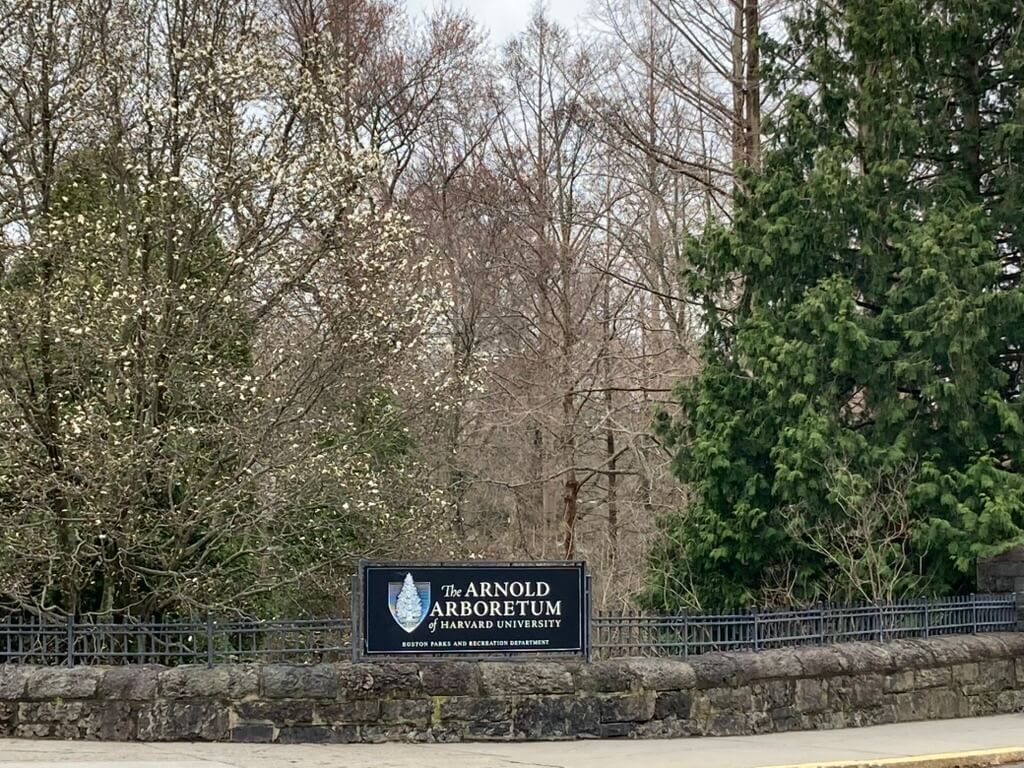
During our conversation over his prepared breakfast and our long walk in the Arboretum that belongs to Harvard University, I got an unexpected glimpse into Steve’s life. His inspiring resistance to the government in different periods, joining protests and refusing to pay taxes to object to how the money is used by the government. He would declare his tax money and put it in an escrow account and tell the government “Here is the money that I don’t want to pay to support you.” He is not even keeping the money for himself. Counting the consequences that followed, I was more inspired to know that he started doing the same thing last year to object against the Gaza genocide. I bet Steve looks in the mirror and feels true to himself. After our walk, Steve had to leave for some appointments, among them his piano lesson. I prepared myself for Amr’s wedding, picked up the rental car, picked up Anna, one of Amr’s friends, and we drove to the wedding at a venue on the lake.
Amr’s bride is American, the wedding had a majority of American guests and some Egyptians from Amr’s side. The ceremony started in joyous and classy fashion. My heart melted to the words of their vows and I truly wish them a prosperous life with never-ending love. I mingled with other invitees and introduced myself randomly. “The world is too small,” I said when I met Sayed, another Egyptian doctor who used to live in the same building as my late grandmother! I was seated at a table with other epileptologists from Amr’s department in Harvard’s Brigham and Women’s Hospital. Eating, socialising, and dancing to Western and Egyptian songs concluded the beautiful event.
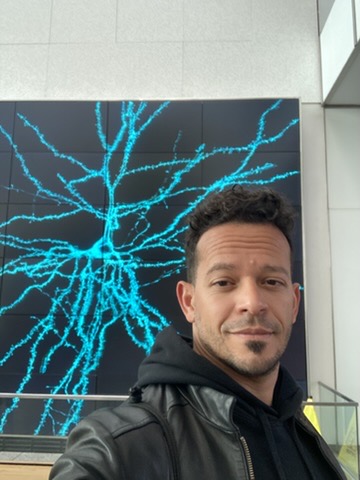
The next day Steve had to leave early for a sewing lesson. It is impressive how many things this man is still learning. I had my breakfast in a nearby café, then decided to visit the Museum of Science. A big building full of creative scientific experiences that would delight the most apathetic child. I roamed around avoiding stepping on the thousands of children that filled the museum with their accompanying adults and felt slightly overwhelmed with inspiration. Ideas for art projects that include scientific principles always excite me, knowing that I will only manage to realise a few of them in my lifetime 🙁 I grabbed a bite and decided spontaneously to attend an improv theatre show. Improv theatre is one of my favourite hobbies from many years ago and is again a place that never disappoints for some laughs and creativity. During the show, the actors asked which guest thought he came from the furthest. Egypt (or even Switzerland) was obviously further than New Jersey. They asked me a few questions about Egypt and I shared with them that Victoria’s Secret has many branches in Cairo since a few decades ago. They used my answer to generate a hilariously improvised show including King Tut wearing lingerie and an actress who had a bra branded “King Tit” hehehehe. After the show, Steve and I went to a free jazz concert in a nearby local church. It featured a mix of Black and white artists. Steve mentioned that this is not very common, and that the music scene in Boston is unfortunately often segregated. Steve offered to host me for two extra nights since we got along very well. I was thankful for his generosity and company.
With a neuron in Boston Museum of Science
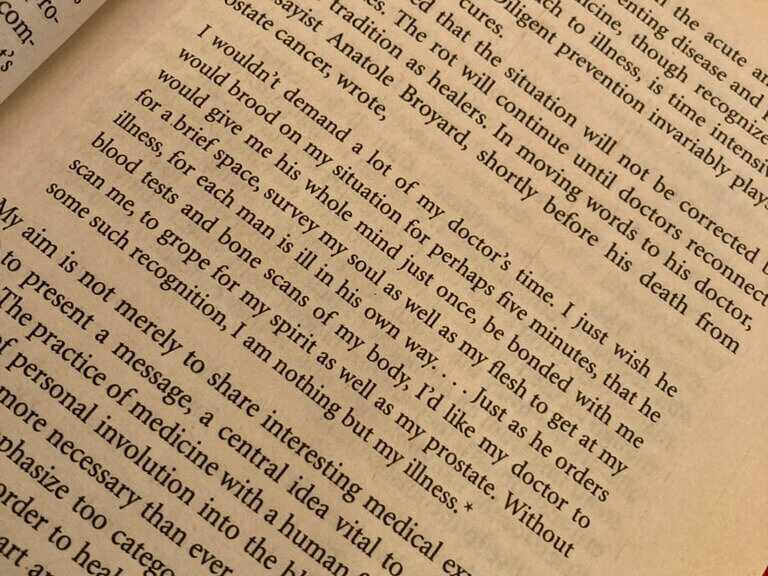
I had no plans for Sunday. So I joined Steve and his friend Linda at an estate sale — which is practically when a family is leaving a house and selling everything: furniture, books, etc. Everything has a price tag, and you roam around and buy what you want. I went to the book section and bought a couple of books from the intriguing collection of what seemed to me to be a remarkable family. “The Lost Art of Healing” was written by Nobel Prize winner Dr. Bernard Lown, the man who invented the cardiac defibrillator. Steve and Linda dropped me near Harvard Square where I visited the Harvard Art Museums and roamed around different Harvard buildings. It felt somehow surreal to be there, where some of the greatest minds on the planet existed/exist. I wondered how it is to live here. What kind of interactions do you have with people in the bakery or in the canteen? What kind of conversations do you start or overhear in a bar? A kind of self-sufficient and auto-stimulating environment? I went for the famous lobster sandwich and oysters for lunch, then took my newly acquired book and went to a Harvard common area, sat among students and scientists, and hungrily devoured the pages; learning, being inspired, and thinking about the chain of events that led me to this moment. The butterfly effect. Was it deciding to Couchsurf? Or contacting Steve? Or deciding to join the estate sale? Has another sequence of events, in a parallel universe, led to an even more enriching experience? Steve went to donate platelets (would he please stop making me feel useless to society??) and afterward we met at an Egyptian restaurant where I introduced him to Koshari, Mahshi, Hawawshi and other typical Egyptian dishes. We split again so he could go with a friend to another jazz concert, while I intended to go to a bachata party — only to be overpowered by the sweet tiredness of jet lag.
from “The Lost Art of Healing”
On Monday morning I put on my suit and went to Brigham Hospital to spend the morning in the Epileptology Department. I had agreed with Barbara, the head of the department, to shadow there and see how things are done. I wanted to get a feeling of how things are done in a Harvard hospital. I attended a consultation with a patient with her, a meeting about functional neurological disorders (she is the president of the International Society of Functional Neurological Disorders), and exchanged a few questions about how epilepsy is diagnosed and our corresponding institutions. Another interesting episode in my Boston chronicle, and I have to say — how we do things in Zürich is not bad, it is not bad at all. Probably one thing that caught my attention was a wall with “Best Teacher of the Month,” where some doctor was awarded this title for his teaching activities. This reminded me of that rewarding American work culture that is almost absent in German-speaking countries. In Germany and Switzerland you only get letters of warning and lists of shame, listing doctors who are late in delivering patient reports, while good doctors (or other workers, for that matter) never get any recognition. So this is a shout-out to anyone who managed to read until this line: please use positive feedback at least as often as you use negative feedback, whether in work or in a relationship. We need a stronger positive-feedback culture. I grabbed a quick lunch, went to Steve’s place, picked up my stuff, and headed to the airport where I would fly to Miami. I’m done with this Boston cold weather.
In Miami, I won’t be Couchsurfing. Instead, I will try HomeExchange.com for the first time. I learned about it at the end of last year, and another encounter a couple of weeks ago refreshed this knowledge. So I decided to let some people stay at my place during my trip. This gave me some “points” that I can use to stay at other people’s places around the world. I used these points to book an apartment in Miami for five nights. This has already saved me a few hundred dollars (if you wonder how I can travel so often 🙂 ). I will be joined in Miami by Mohamed, a Syrian epileptologist who, after finishing his training in Germany, decided to go to the United States and re-do his training, currently living in Texas. He saw my posts on Instagram and happened to have holidays he was undecided about. He decided to fly to Miami to join me. Sweet serendipity.
Before coming to Morocco, I had more negative than positive experiences with Moroccans in Europe. This trip flipped my perception 180 degrees, turning me into a fan of the country and the countrymen (including countrywomen for our feminist readers among you). They were mostly kind and sincere people. Compared to Egypt, I found more quality services in Morocco. I always felt very welcomed, especially when people came to know that I am Egyptian. The two countries share a history rich in culture. I also noticed that the rate of obesity is not as high as in many other Arab countries (and definitely less than in Germany and England, for example). To my surprise, the local cuisine does not have a lot of carbohydrates. It is hard to find a dish that is served with rice, and the cuisine in general had lots of meat and vegetables.
I arrived in Rabat on a Saturday, just in time for the Liverpool vs. Tottenham football game. A local taxi driver guided me to a rooftop terrace crowning a fancy-looking hotel, where a simple espresso costs 5$. The other clients were mostly couples enjoying romantic dates. Joining me in a non-romantic way were Mirjam, a new local friend she had made, Sufian, and two fellow young travelers from Ireland and Colorado that she had met at the hostel. We exchanged travel impressions and suggestions, a great way to refine your trip-plan on the fly.
The Colorado traveler, Braeden, had taken the opposite route, starting in the north. He visited Chefchaouen, the famous blue mountain village known for its reputation in weed production. Surprisingly, he was disappointed by the quality of the weed in comparison to Colorado, where marijuana had been legalized around a decade ago. It seems they’ve likely perfected the art of growing weed using scientific methods, research, and development.
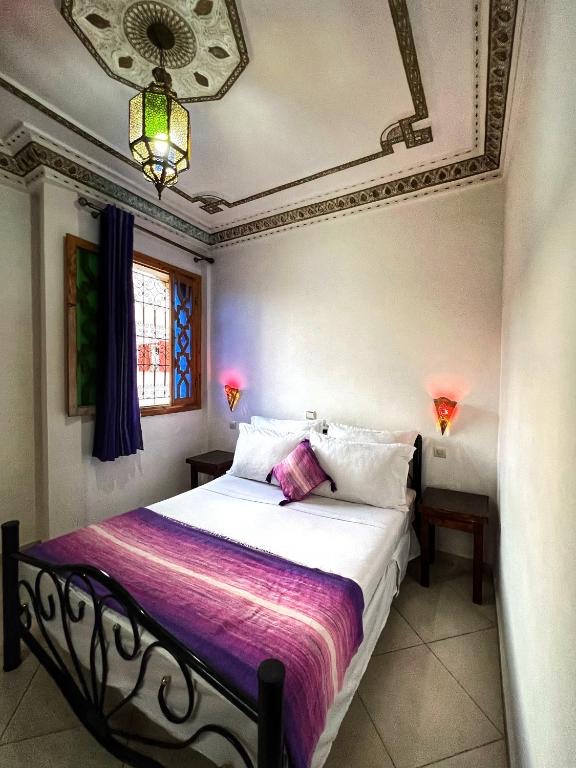
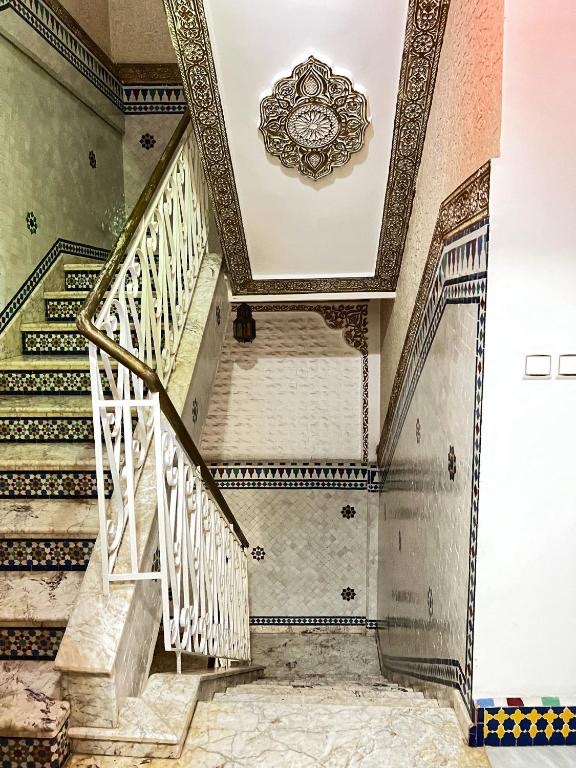
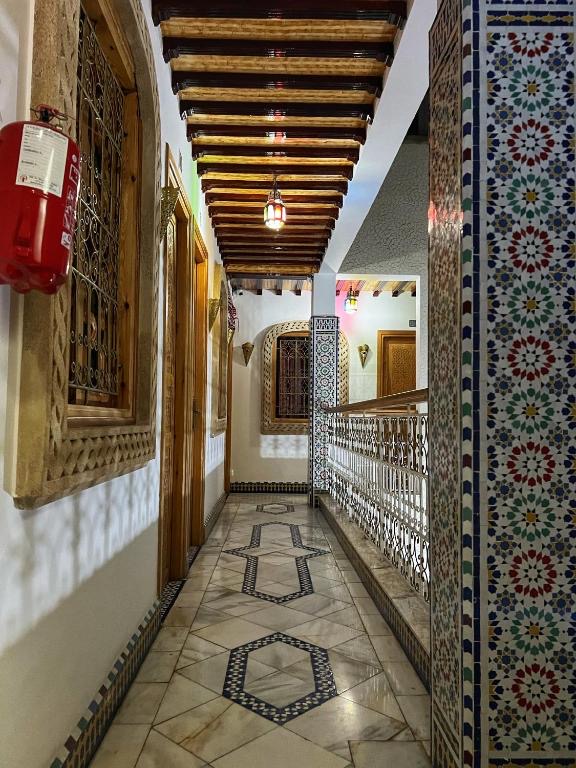
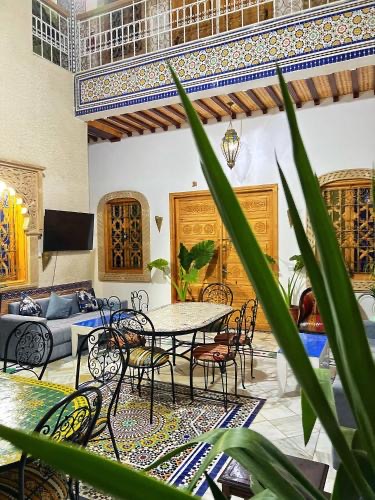
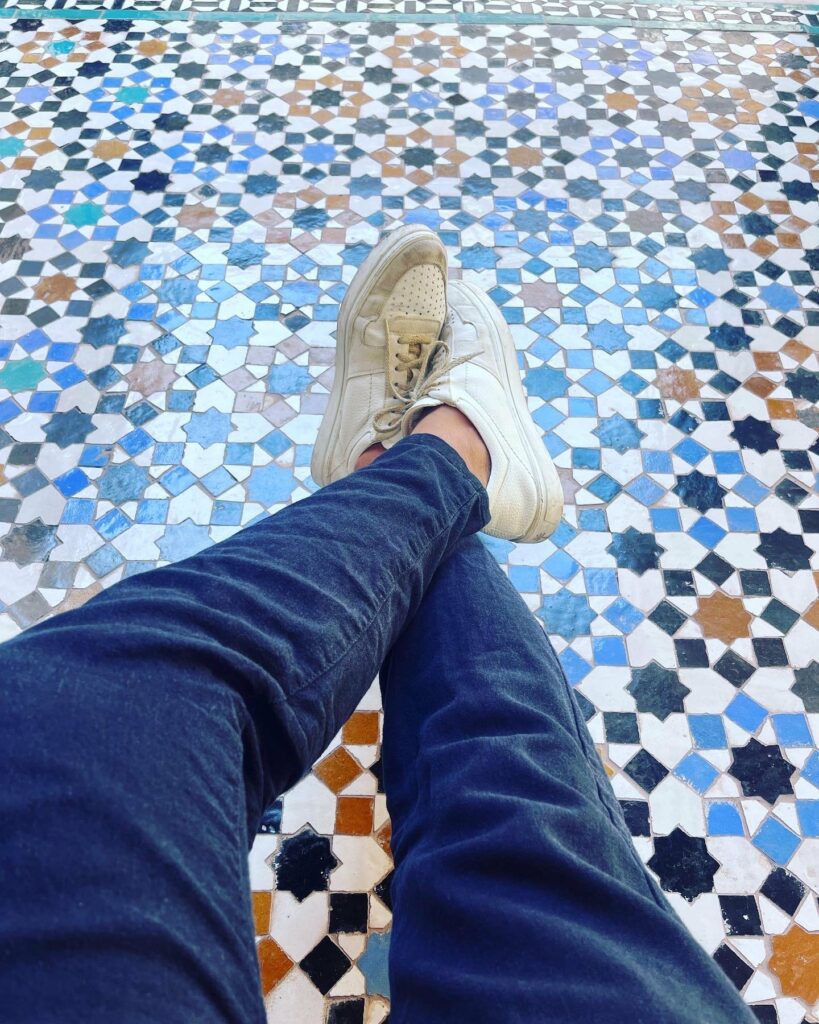
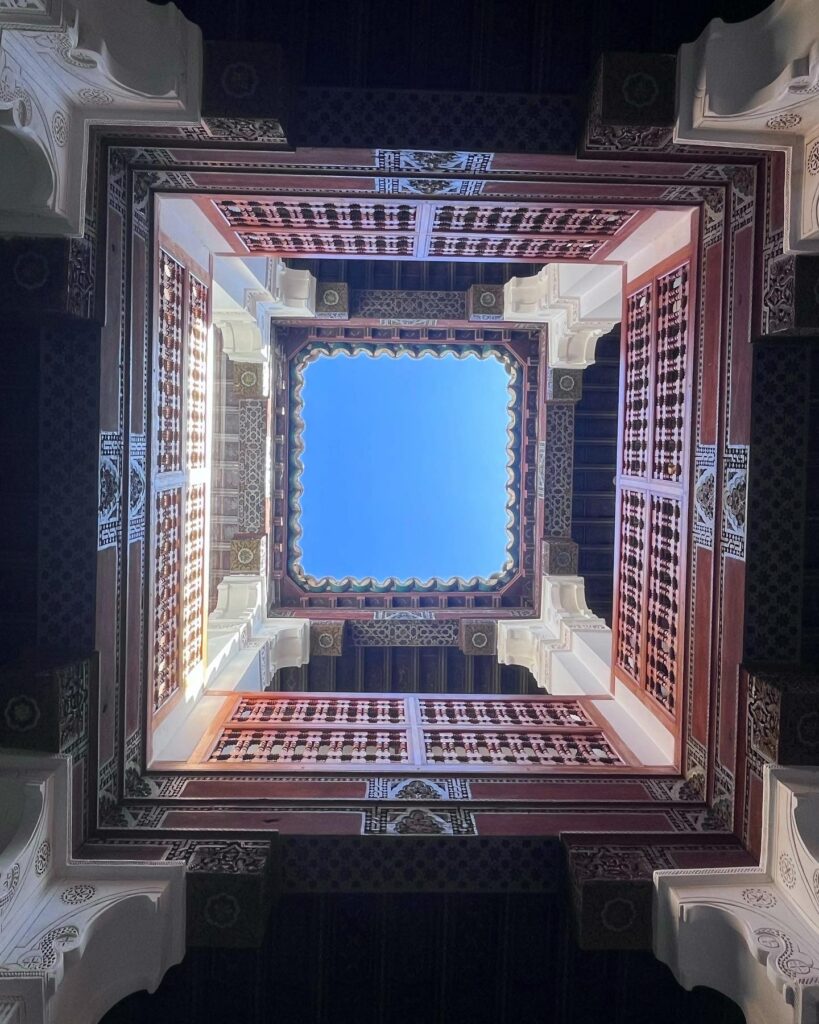
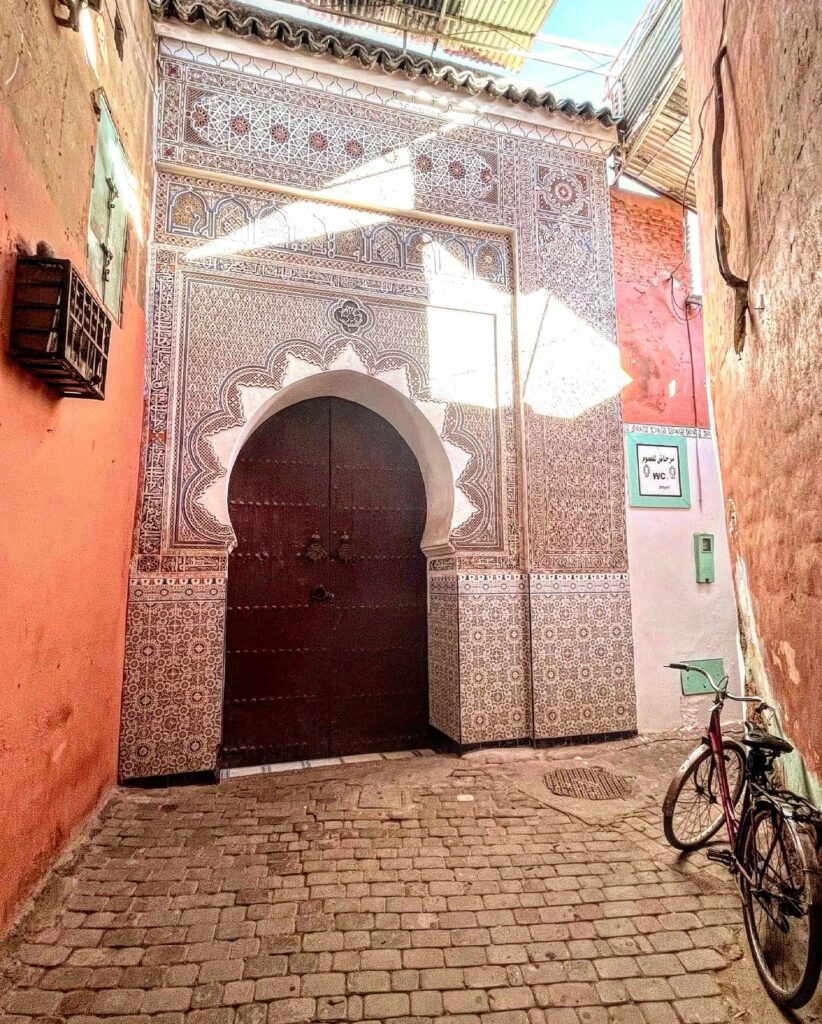
I left the crowd after the game and headed to my accommodation in a local riad in the old town. Moroccan riads are traditional, elegant residences with distinctive architecture, often centered around a courtyard or garden. They are renowned for their intricate tilework and Islamic decorations.
The riad in Rabat
***
Rabat showed me a different side of Morocco. Its clean, wide streets were lined with perfectly aligned palm trees and featured many beauiful architectural constructions. I went to meet Sarah, a Moroccan architect who had spent six years in the United States pursuing her MBA and managing some exciting projects in DC. We had a lengthy walk in the suburbs of Rabat, near the king’s palace and a golf course.
The highly intelligent and talkative Sarah shared valuable insights about Moroccan society, the economy, and politics. A significant portion of the economy is based on mining, particularly phosphate mining, with Morocco holding the world’s largest phosphate deposits, comprising 75% of global reserves. I was charmed by her liveliness and her fluency in four languages. She expressed her intention to leave Morocco after a few months to explore new life perspectives.
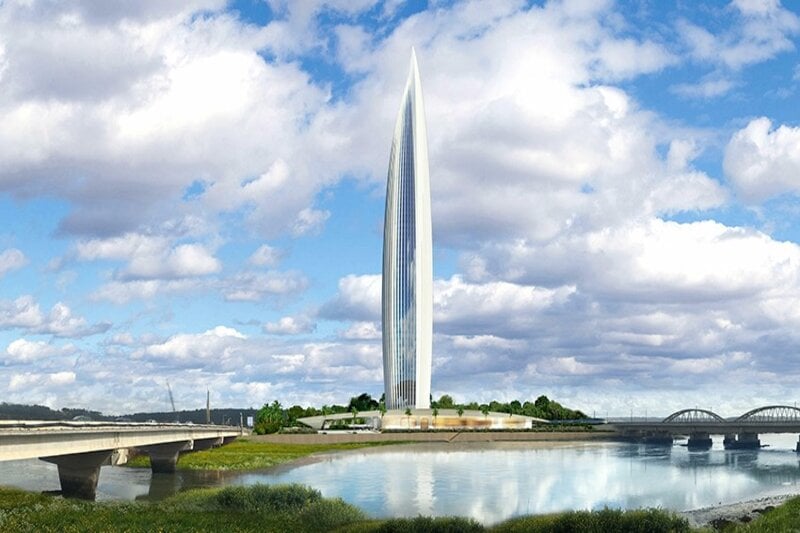
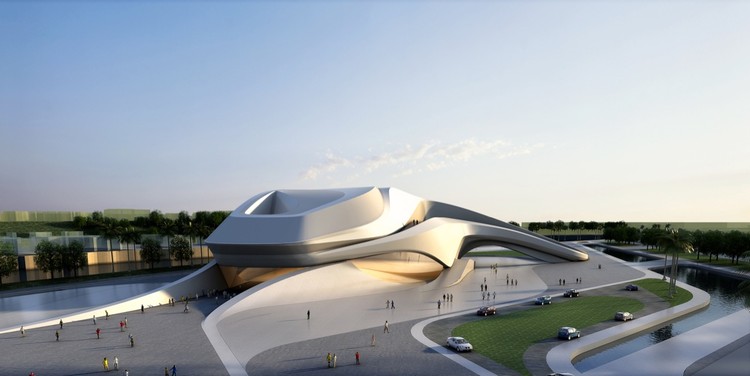
Following our walk, we enjoyed a cozy lunch with more conversations. Then, Sarah volunteered to drive me around Rabat in her white Fiat 500. We drove through the streets of Rabat as she pointed out different landmarks, including the new, under-construction Hassan VI’s tower and the soon-to-be-operational magnificent Grand Theatre of Rabat, designed by the late, great British-Iraqi power woman and renowned architect, Zaha Hadid. I made a promise to myself to come back to Rabat.
Hassan VI’s towerGrand theatre of Rabat
After saying goodbye to Sarah, I attended a local afternoon Latin party for some social dancing, where I was impressed by the excellent local salsa dancers, surpassing those in other cities. Soon after, I had to depart after nearly 24 hours in Rabat to catch my train to the historic town of Fes. At the train station, I discovered that the train was delayed by 2 hours. I hummed some thankful prayers for the taken-for-granted Swiss railways company, and spent my waiting-time reading.
After a bus journey to Marrakesh , it was time to split the company. David stayed in Marrakesh while Mirjam and I took the train for Casablanca. The almost 3 hours of discomfort in the second class was not my most favorite experience, and the train was packed with locals with no significant air conditioning so that by the end of the ride, I felt myself drained of all manifestations of life, like a deflated balloon! But Casablanca was a significant stop on my trip. Many travelers would say that Casablanca is just a big jungle of concrete not interesting to visit. For me, big cities are homes for many smart and professional people, which is a big focus of mine in my trips.
***
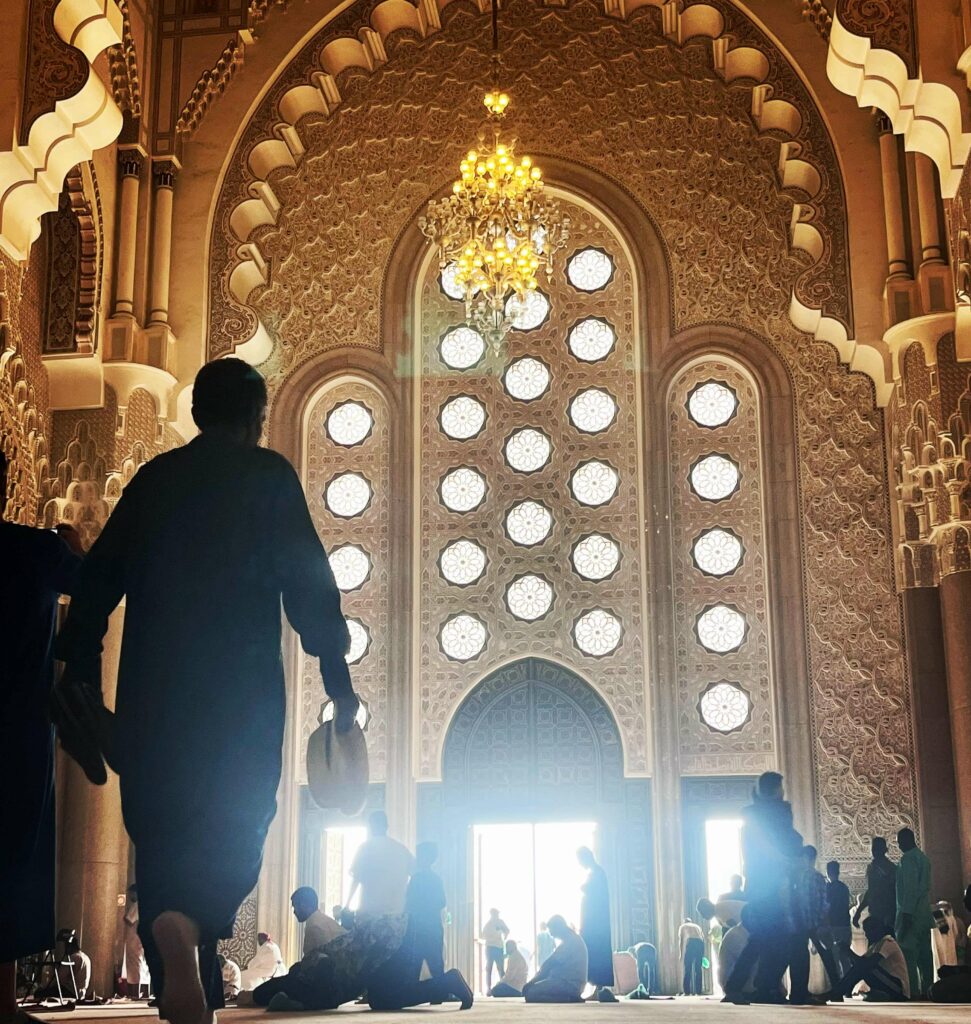
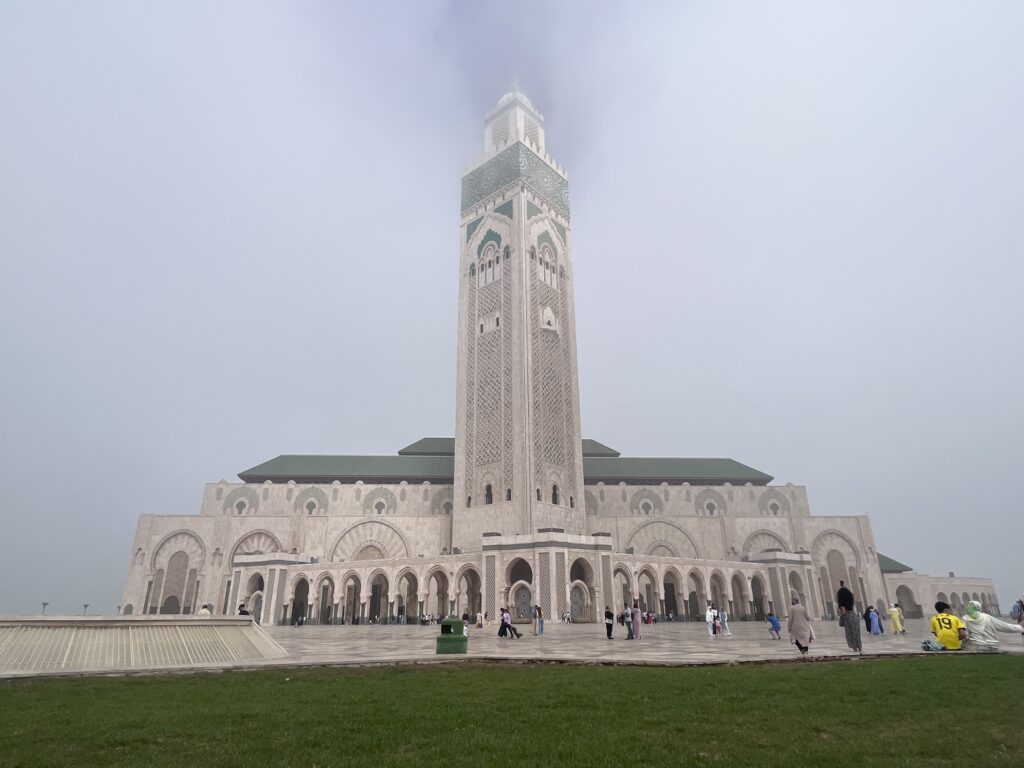
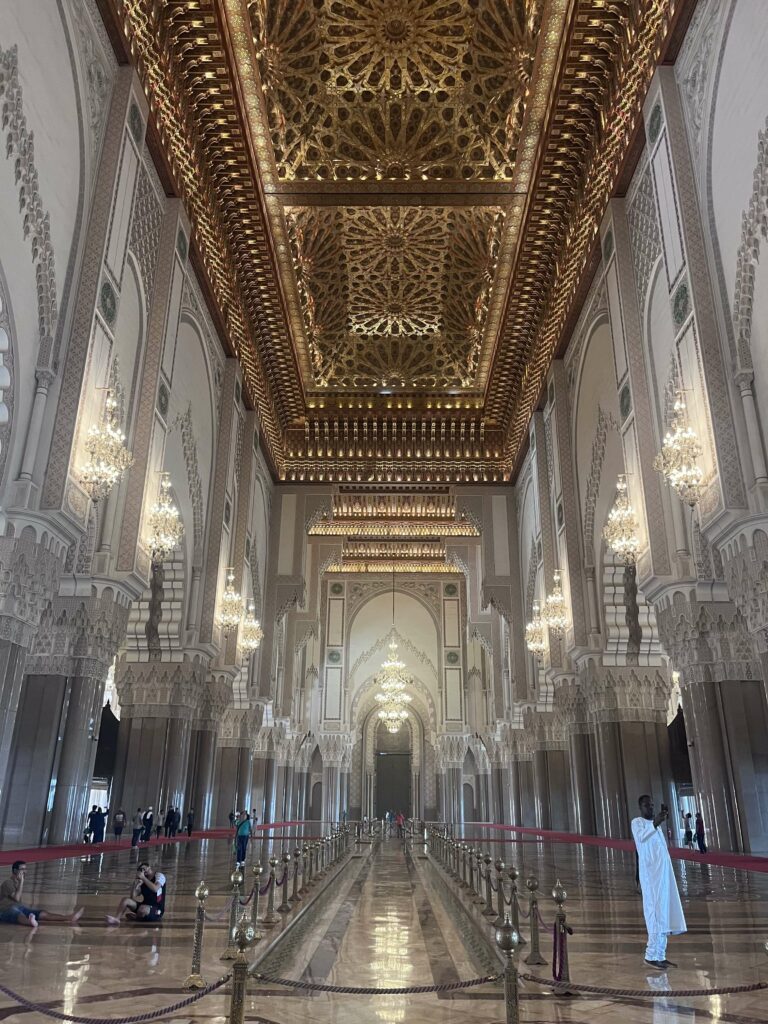
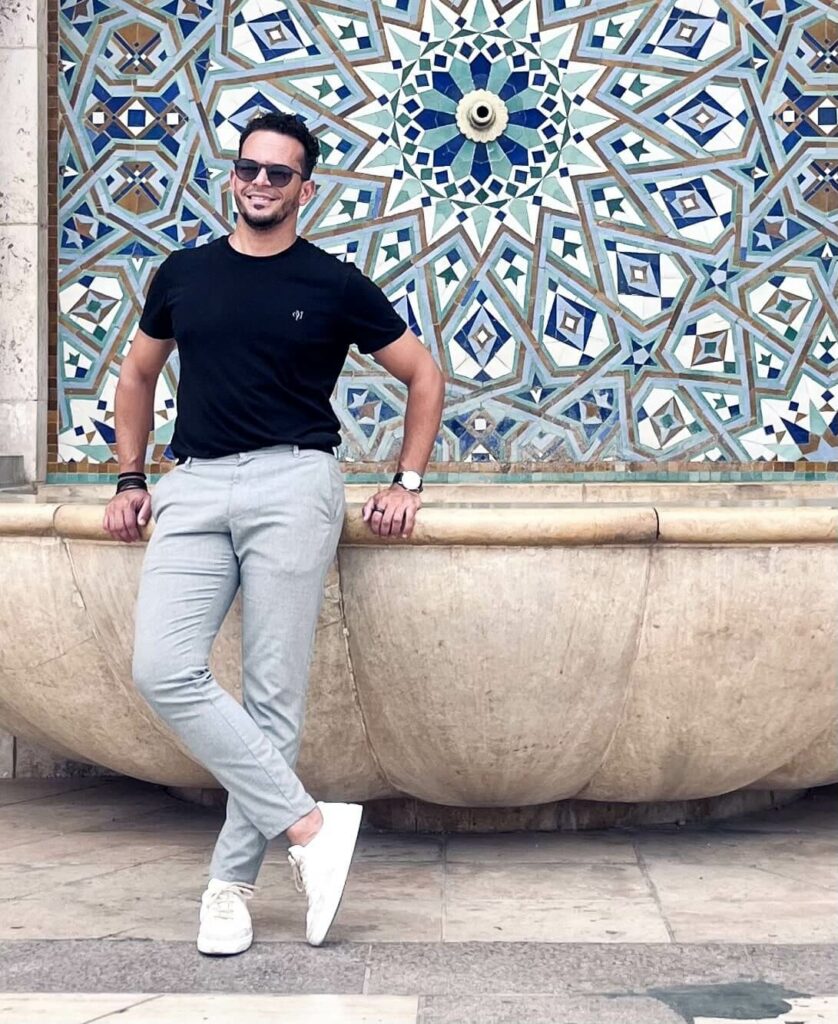
On the first day in Casablanca, I had a local breakfast and then headed to meet Mirjam to visit the remarkable Hassan II Mosque. It is the largest functioning mosque in Africa, and its minaret ranks as the second tallest in the world. When we arrived, the 60-story minaret was almost disappearing in the fog that surrounded the mosque. It was nearly prayer time, making it clear that Mirjam wouldn’t be going inside. I decided to attend the Friday prayer, while Mirjam waited in a café, and we met again after the prayer.
The mosque is immense, and its decorations exude majesty. Intricate patterns in marble, wood, and other materials, the nature of which I couldn’t identify, contributed to a certain atmosphere of peace and serenity.
During the “Khutbah,” the imam’s sermon, the topic was the earthquake, highlighting how Moroccans were united in managing the aftermath. The absence of differences between Arabs and Berbers hinted at underlying sensitivities in the region. Throughout my trip, I encountered many Moroccans who took immense pride in their nation’s earthquake response, recounting stories of how they proudly declined assistance from France. France was not amused.
A short video showing the Hassan II Mosque
After visiting the mosque, I met Mirjam again, who had managed to make a random new friend, Faisal, a local young guy in his thirties. I also got to know Faisal while observing surfers ride the high ocean waves just outside the mosque. Faisal didn’t hide the fact that he was deported from Germany after living there for 5 years. He was then trying to build his startup, specializing in various crimes like stealing and selling drugs. He traveled around many European countries in the process of finding a new home. After his deportation, he decided to start a new life and switch to the side of the angels by visiting Mecca. He currently works as a taxi driver, and today was his day off. We all went to the “Medina” together, where we had a quiet, fancy lunch with even better food than usual. Afterwards, we joined a Couchsurfing meeting where many young Moroccans and travelers gathered for chatting and later for a party. At some point, I detached to visit a Latin party, only to find that it was canceled because of the prophet’s birthday (which is not as important for Muslims as Christmas is for Christians). I called it a night.
***
The next day I went again for a local breakfast and decided to have a Moroccan hammam experience. Who could imagine, that there is a big colossal hammam underneath the big Hassan II mosque?
I decided to go all-in, and took the deluxe package with all the features, which costed me around 60 euros.
First, I found myself in a jacuzzi filled with sea water, where I tortured my body with a hydraulic massage. After around 30 min, they took me to a steam room, where my hammam-man (?, I don’t name of this job, maybe hammamist?) soaped up my body, and I stayed there for eternity, I think to open the pores of the skin to receive the next mystery.
Then came the main event – the hammam table. The hammamist got to work, scrubbing away at my skin like it was his enemy. As I sat down, I noticed some dark thingies on the floor. With an embarrassment, I asked him if that was what he had just exfoliated from my skin. He grinned and confirmed it was indeed my “dead skin.” I thought I was Mr. Clean with my daily showers, but this was next-level cleanliness. I had to ask my hammamist how often he subjected himself to this ritual, and he proudly said that he did it once a month. From that moment on, I became a believer that Morocco must be the cleanest nation on Earth. Sorry, other “hammamistans” out there.
After the epic scrubbing session, he slapped on a mask made of coffee and chocolate, claiming it was a treat for my skin. I felt like a piece of fruit dipped in chocolate in a Christmas market. I didn’t have any erotic thoughts at all 😀
Then, he unleashed a full-body massage and some moves that looked like he was a chiropractor. Following the mask’s wash-off, I received another round of massage, this time with argan oil.
Leaving the hammam, I looked at my skin in disbelief. Somehow I didn’t recognise my own skin. I felt new and I promised myself that I shall offer my body this love regularly. I went straight to the beautiful Casablanca train station and took the train to Rabat, the capital.
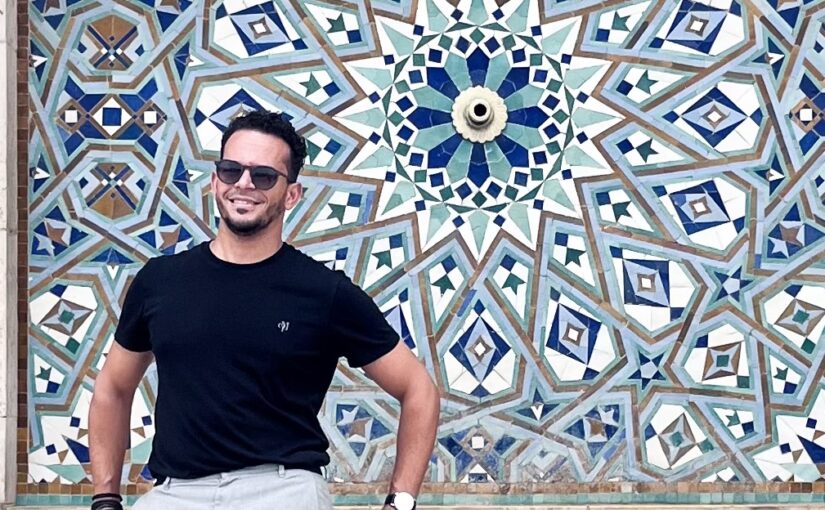
A short video showing the hammamWith one of thr fount In front of Hassan II Mosque
A couple of weeks ago, I was looking at the world map and pondering where I want to go for my two weeks off. It was Africa calling me and I was also thinking about some dance festival in Barcelona at the end of the two weeks. So why not fly to Marrakesh and hitchhike your way up to Spain? I booked a very cheap one-way flight to Marrakesh and decided to do it the old way, Couchsurfing 🙂 at least start this way. I have been spoiling myself with hotels and resorts for sometime now that I don’t even know if can do hostels. I thought I go for it anyway. Two days after booking my flight, an earthquake happened in Marrakesh leaving a couple of thousand people dead 🙁
I felt like going anyway. Somehow, irresponsible decisions usually bring a lot of fun 😀 my mom was wondering, why I keep making such decisions. A certain fatalism, that we all have in a way or another? Maybe!
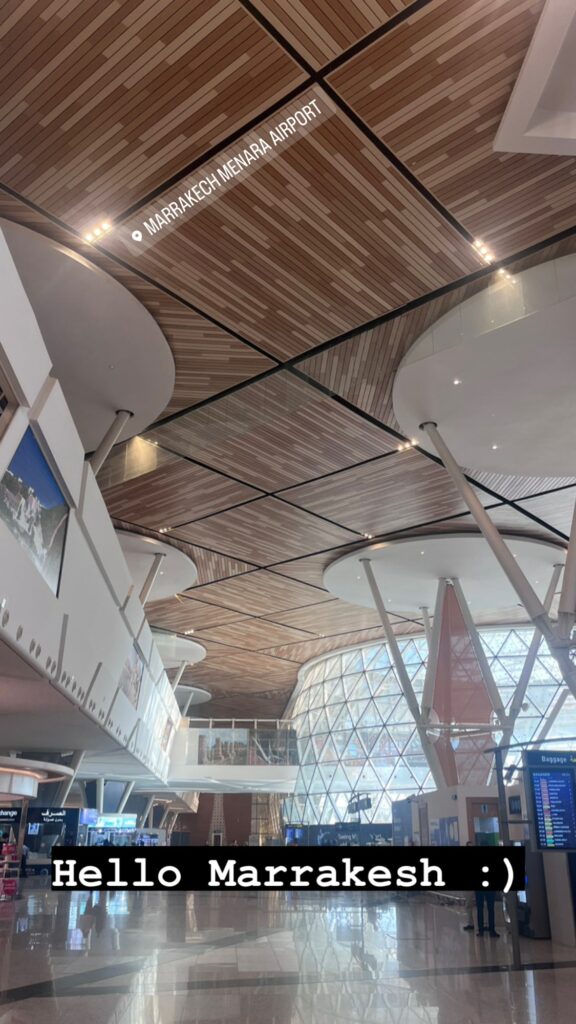
I landed in the nice Marrakesh airport which appealed to me with its beautiful design. My host, Adam, said I could take a taxi for 15-20$ or the local bus that costs less than 0.5$. I said let’s try the bus. But when the bus pulled off and I saw the people stacked inside like a sardine tin, I decided I am still a spoiled p**** and backed off. A random local with one tooth approached me and asked if I needed a ride. I told him my destination and he asked for a funny amount of 200$ 😀 despite mostly not understanding each other, we managed to agree on 10$
I reached Adam’s place and we immediately started a long conversation getting to know each other. This conversation stretched over a few hours and partly took place on his motorbike where only he wore a helmet (for the police) and I was constantly anticipating getting one of my knees (or both) smashed while he squeezed in between cars. We talked about everything. Adam is a very smart guy with excellent English and works as a freelancer graphics designer. We bought seeds (eating them is a usual activity in the Middle East, you usually spit the peel on the floor) and went to a small park to chill, watching local families chill and lots of children play on the street. This reminded me of my childhood with all the adventures of our children/teenage gang back then (it was named: “strip and run naked in the darkness”).
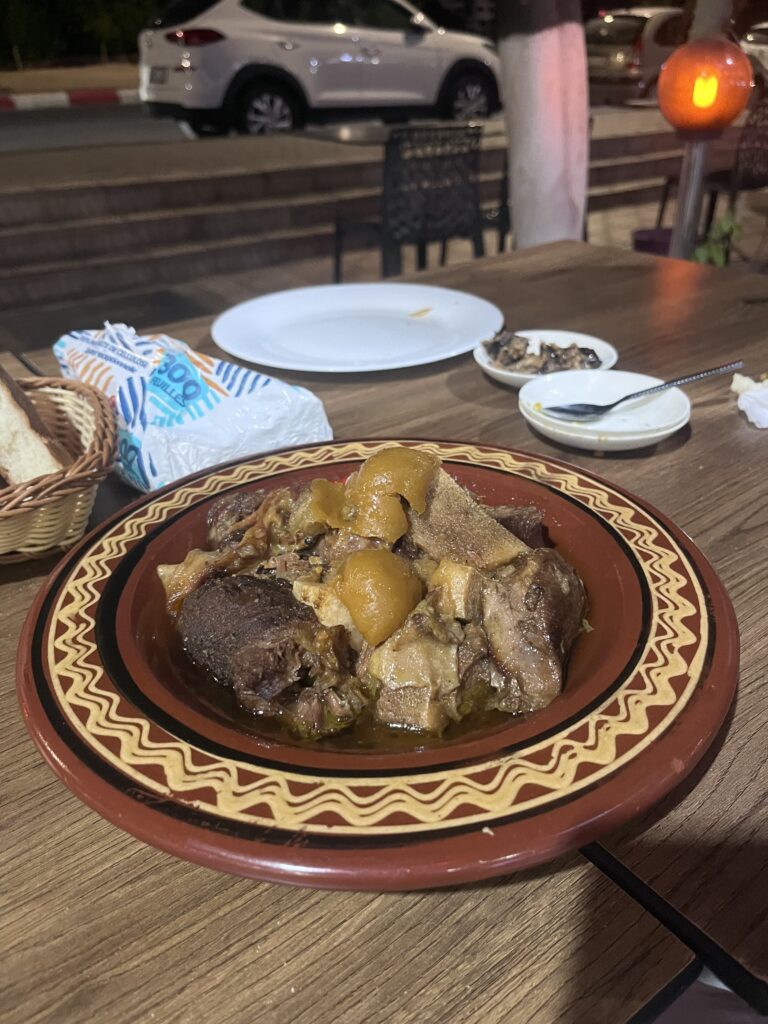
After making a mess with the seed peels on the ground, while Adam assured me that it will be cleaned in the early morning and me feeling guilty, we went for dinner in a local restaurant that offers “Tanjia”, a Marrakesh speciality of meat that is made in a clay pot. This was the beginning of my culinary adventure in Morocco. The meat was so soft, it breaks before you even touch it 😀 melts in your mouth like a Swiss chocolate, and its taste triggers senses you didn’t know you had.
***
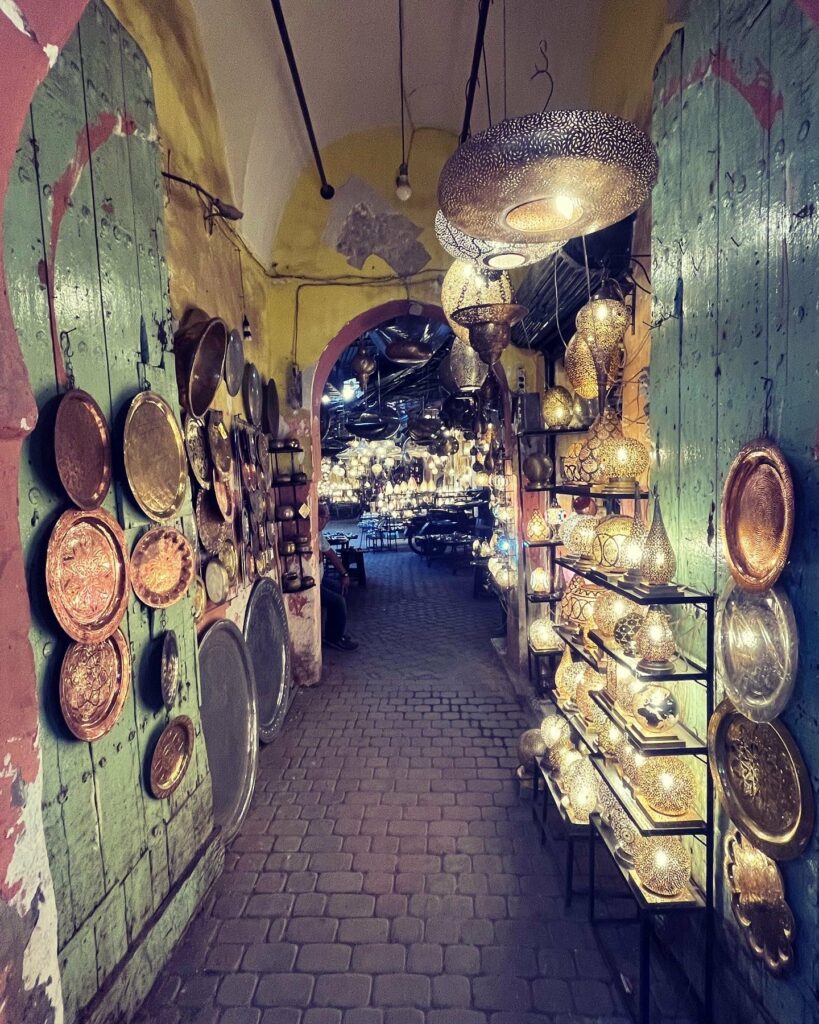
The next two days, Sunday and Monday, my schedule was the same, have breakfast in a local breakfast place near Adam’s place, trying different options. Impressive was the local avocado-and-nuts smoothie which seemed like an aphrodisiac bomb, inappropriate for my trip. After breakfast I would go to the “Medina”, the old town, where I get lost in its alleys full of exotic handcrafts, leather goods, copper lamps and souvenirs. A lot of beautiful things I would like to buy. Here and there I stop to bargain and mostly have a funny conversation when the local sellers discover my Egyptian dialect. Due to the decades of spread of Egyptian movies and music, the whole Arab world understands our dialect and mostly have some appreciation for Egyptians. The market is huge and I enjoyed it immensely. Outside there was a huge square named “Jema elfnaa” which might mean “The assembly of death”! Now for me, this square was THE MARRAKESH! Full of unbelievable chaos of people, juice sellers, cobra charmers, monkeys, singers, darwishs, musicians, more fresh juice sellers, food stalls and many other things. Many things to see, many sounds and noises that penetrate your ear drums, and many smells (mostly seductive smell of a tajine). An overload of sensory input that amazes you shortly but could also give you a nervous breakdown if the exposure time slips unattended. At night, a lot of locals come and gather around the local musicians that played mostly drums and oud. I confess I didn’t like this music at all. I observed the locals swaying with these awful tunes and wondered, what could have led to this affinity? But then, there is also “heavy metal” and other kinds of horrible music tastes out there in the world.
The evening was usually slow meeting with Klaudia from Poland and going to a Latin party where I met some locals and some Latinos.
***
One of the things I like to do during travelling is to learn cooking. I only succeeded in doing this in Mexico a few years ago but I also don’t insist on this experience in all countries. But in Morocco it was a must. I booked one cooking class for Monday where I met a british gentleman, an australian couple, an american nurse with her holywood-director aunt as well as three gorgeous and obviously intelligent Austrian ladies with their not-so-gorgeous and not-so-bright fourth friend!
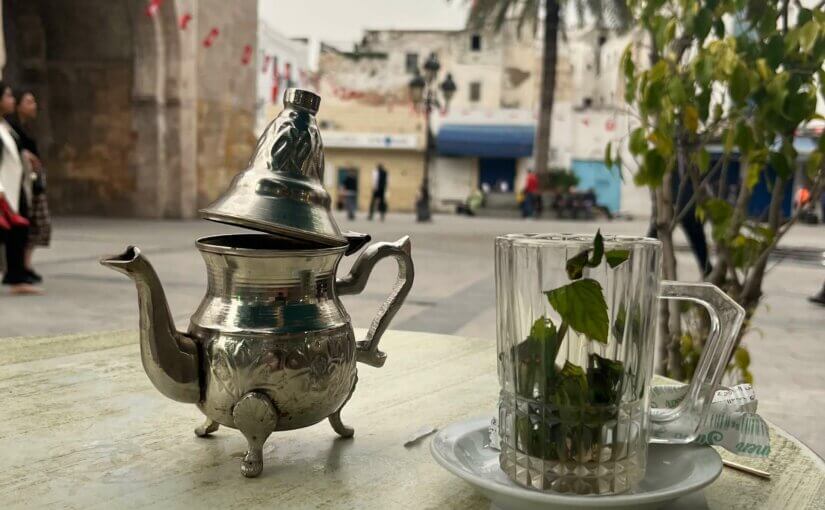
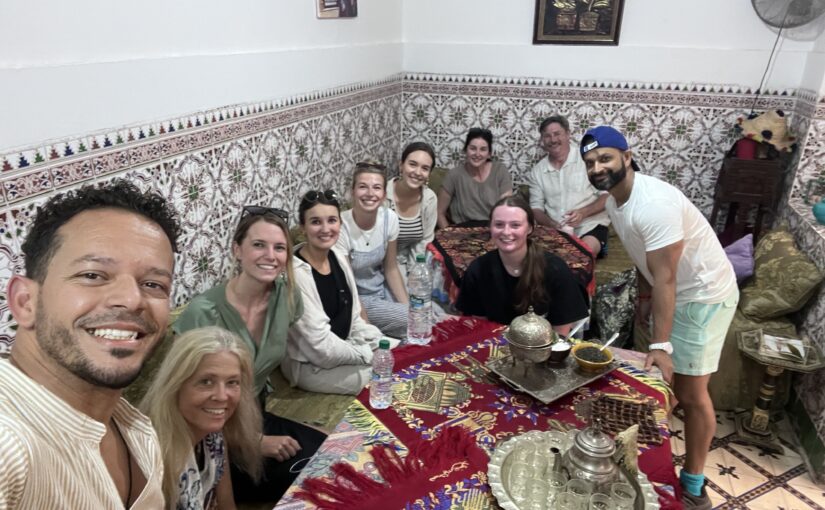
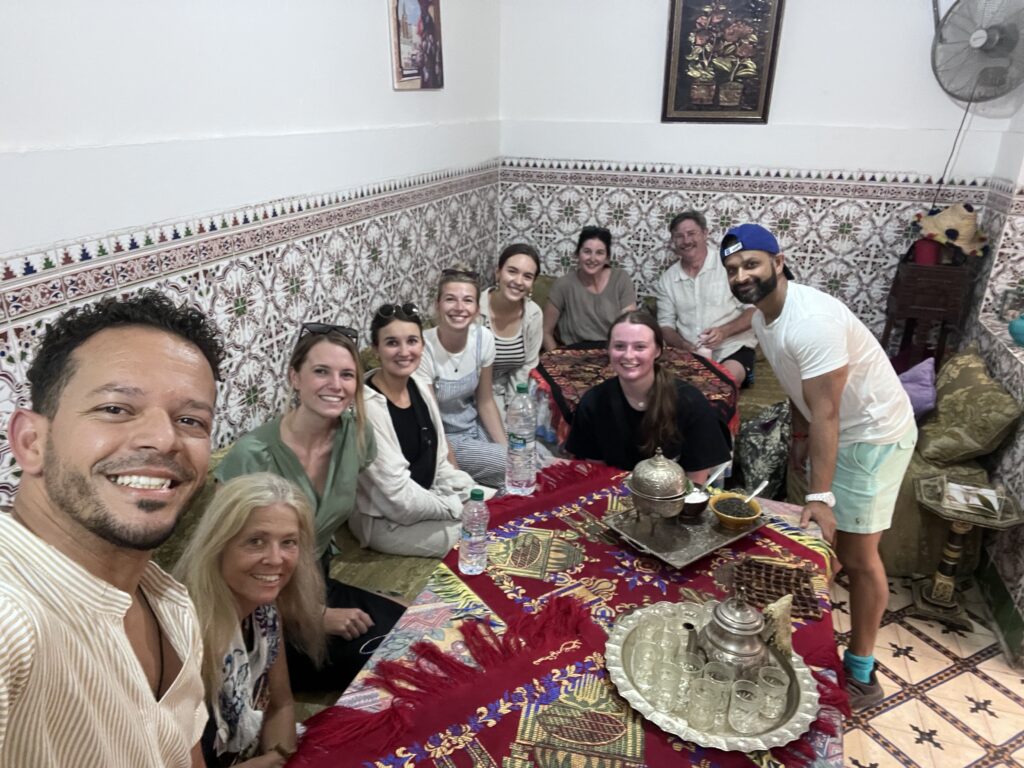
We were picked up by Kauter, our host, at the meeting point and took to the market where we bought the ingredients for the tajine. We then arrived to the house where “Khamisa” was waiting for us. We learned how to prepare Moroccan tea with mint, which I would describe even as a spiritual drink. We then started cooking all together. Cut this vegetable, put this Safran, smash those garlics, stir this mixture. We cooked and exchanged jokes and stories until the food was ready to enjoy. It was quite surreal to me that the process seamed easy but produced a delicious taste!
Happy with my Marrakesh experience, I went back to Adam’s please and where he give me tips and tricks for the rest of my trip. This conversation continued in the morning when I joined him for his daily morning routine, including rolling a joint, taking a coffee from the coffee stall and having a short walk to enjoy his coffee and joint in the nearby park. Adam advised me to go to the nearby city called Essaouira. So I packed my stuff, booked a bus ticket and went!
Three nights in Okinawa. Sometimes you go to a tropical island hoping for sun and enjoying the white sands and transparent turquoise water but find a clouded sky and a strong wind. This was the case in Okinawa. I was already warned by Kate, that a cyclone is approaching and that a typhoon is possible. The predictions said that it is approaching on the day I leave the island. I hesitated only a little before flying to Okinawa, since most of our fears are exaggerated, and since it is a regular event in the region. I assumed that the island is prepared to face such events. It is Japan after all and what I have seen so far makes me trust this country in many things. Things simply work here. Sometimes when I see organised societies, it seems all natural and self-explanatory: There is no garbage in the street because there is a garbage man whose job is to collect the garbage, and people don’t throw garbage in the street. Why would anyone throw garbage on the street? This all sounds very logical but most of the world does not function like this. Most of the world is dirty and dysfunctional, or at least does not function using the same logic. The check-in process in most of the Japanese hotels I stayed in was done by a machine and a hotel employee is hovering around the machines to assist those with less digital competence. The machine scans your passport, finds your reservation, collects your payment and then spits out your room key along with a small paper with your room number. I checked in to the nice room and rushed to explore the features of the toilet 🤣. This is a thing here. This toilette would open the toilet lid once you approach it. By a click of a button you can also control the toilet seat. The usual other functions include controlling water flow to clean you, control water temperature, a funny function oscillates the water so that you increase the area covered 😁. A button for music covers up for the auditory pollution that you might create, and sometimes there is even a button for drying your sparkling clean rear. Most of Europe still needs this kind of evolution, instead of this strange habit of wiping with papers! Living in Europe, one can sense the feeling of “superiority” of the west. Because of the industrial and economic dominance of western countries, as well as the higher quality of life, many people there assume that they are the top of human civilisation and that this welfare is an indicator of an advanced society. Unfortunately, some people generalise this into thinking that the western way of living is the best and the rest of the world has just to “catch up”. Specially in topics like social interactions and morality. A lot of this is justified by its affiliation to science, which is also mostly coming from the west. Here I borrow Tanizaki’s question: how would the world have looked like, given that Japan (I add: or other non-western societies), were at the front of scientific and industrial innovation? Let’s remember that science is the product of scientists, which are always biased human beings. Humanity would have probably advanced in a different way, other than changing the last name of women after marriage or just wiping our rears with papers, and other countless examples of things that don’t make sense to me. The trip to Japan was a milestone for me. Here I saw a top society with totally different culture than the west. An example of how things can be done differently and still function with excellence. Specially on the social level. This gives me hope that globalisation does not necessarily mean westernisation or Americanisation of all countries, but rather on taking the best feature from each culture around the globe.
I spent my time in Okinawa chilling, eating, getting massages daily and dancing. I visited one beach but that was below average. The best Hawaii-like beaches are either more than an hour drive or an hour of ferry ride. Since my driving license is suspended at the moment and I didn’t want to get stranded on a remote Japanese island while the typhoon hits shortly before my return-flight, I relaxed myself by meeting travellers and locals on the island and enjoy lazy and schedule-free 2 days.
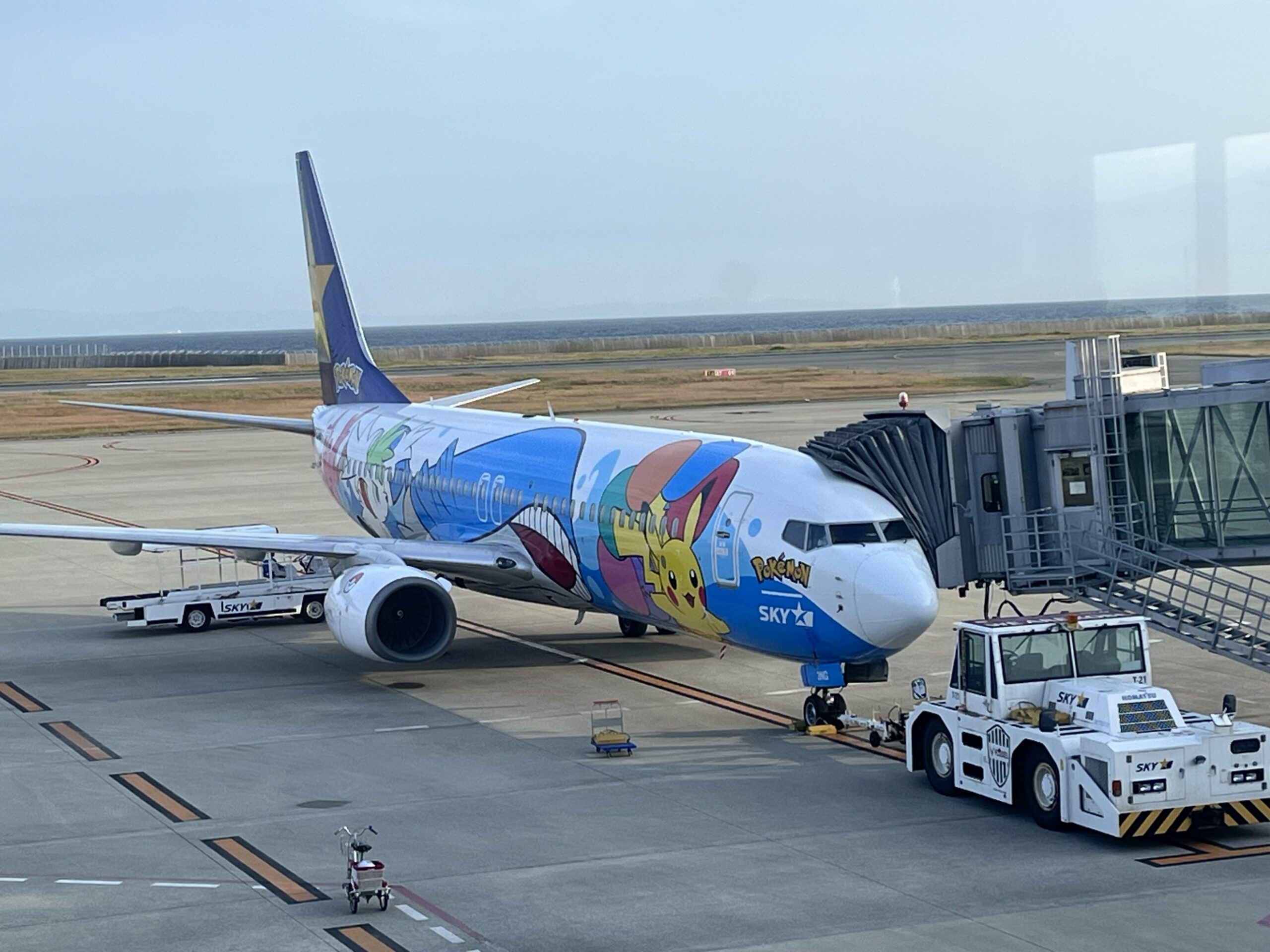
At the end of my trip, I will take back with me a new affection for Japan and Japanese people. The way they bowed to welcome you or to bid you farewell was always heart warming. Sometimes a business owner or worker will come and bid you farewell and wait until you take the lift. Their smile can be felt behind their masks. Always polite, always courteous and always eager to help you. I observed that this is how they treat each other in general. When the flight from Okinawa to Tokyo landed in the rain, and the airport bus came to pick us up, there were two meters from the stairs till the bus where you could get some rain on you. But no! two gentlemen stood there carrying two umbrellas so that the passengers don’t get uncomfortable. The flight attendant came down the stairs of the plane and kept on waving bye-bye to passengers and specially children. I ask myself, is this a job? Is this in the job description? or do they add an extra humane touch? or is it the ”natural” thing to do for them?
So, that’s it. My time in this trip has come to an end and it is time to go back and serve. Thankful and privileged I am to have the time and means to go on this trip. I appreciate your time reading my words and sharing the trip with me. This is one way of fighting the traveler’s loneliness. I am now excited to see how this trip will influence me in the future. I am also excited to come back to Japan one day.
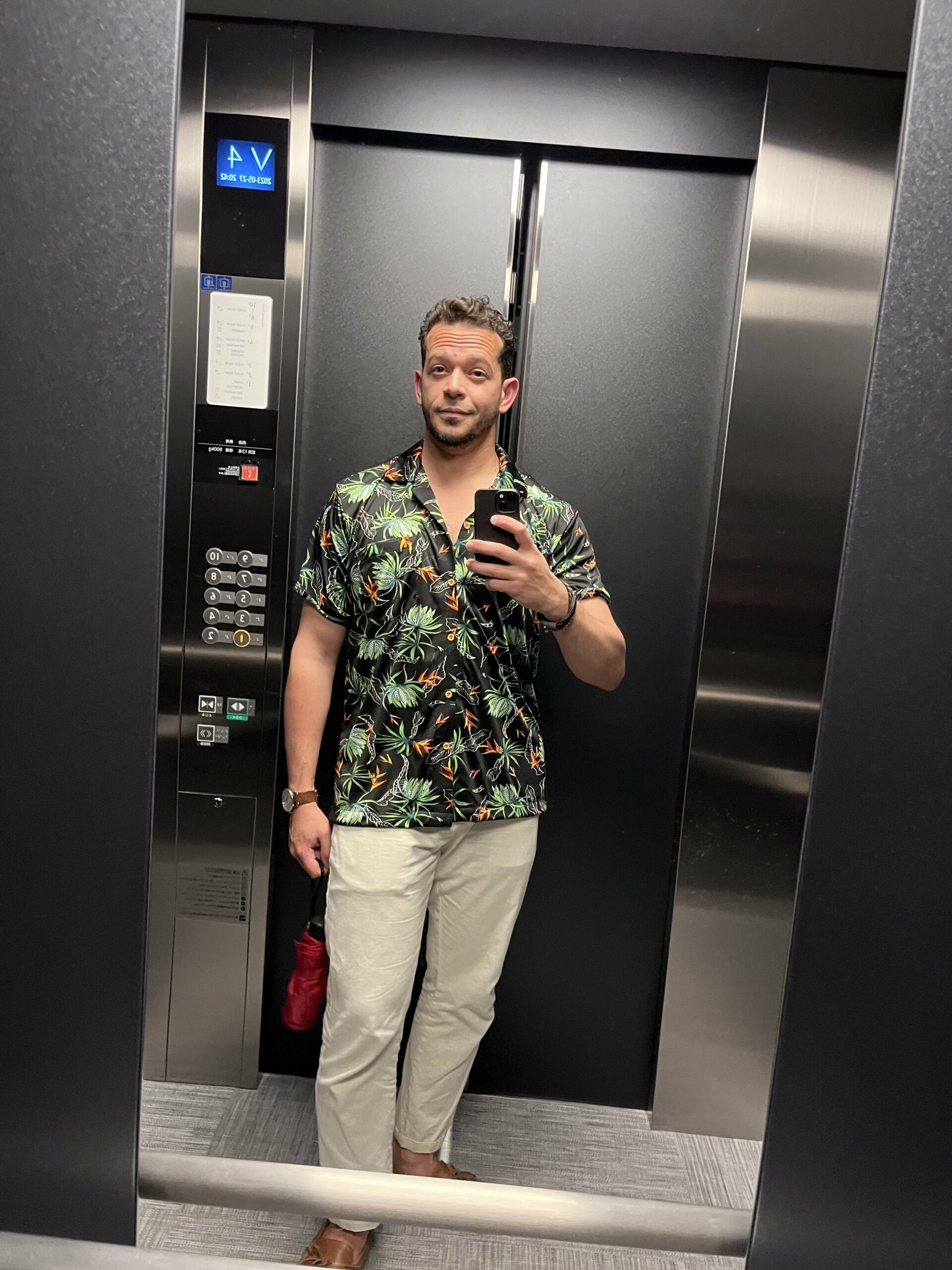
Okinawa! I bought my fl0ral island shirt 😁
A few friends that followed this trip expressed that it would be nice to travel with me. I would gladly disappoint you 😄 having a companion changes the dynamics completely and strips your time of the priceless freedom. Then there is often he conflict of interests and the need of compromise. Unless you are immensely lucky to have the perfect travel partner, I would mostly choose to travel solo. I guess an exception of that would be going to nature-filled destinations like Iceland or camping, then i believe that a loved and like-minded soul is essential to share what you see and what you feel with. Until the next trip, I give you a kiss and a hug.
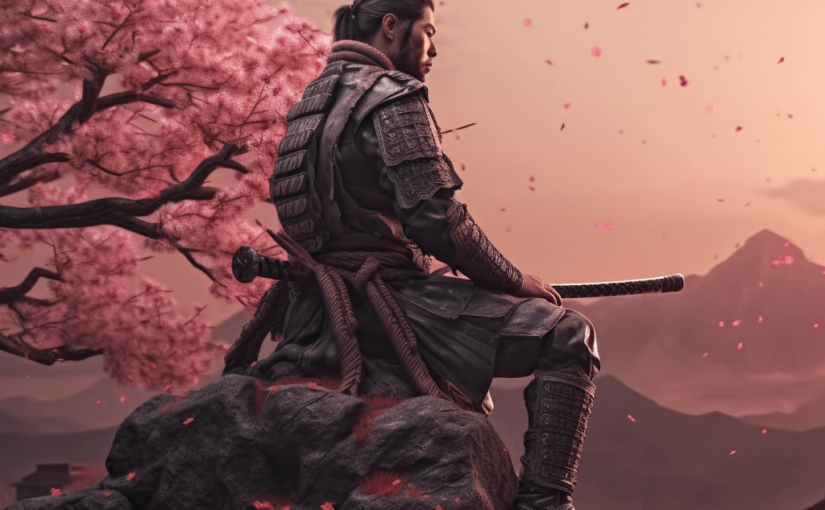
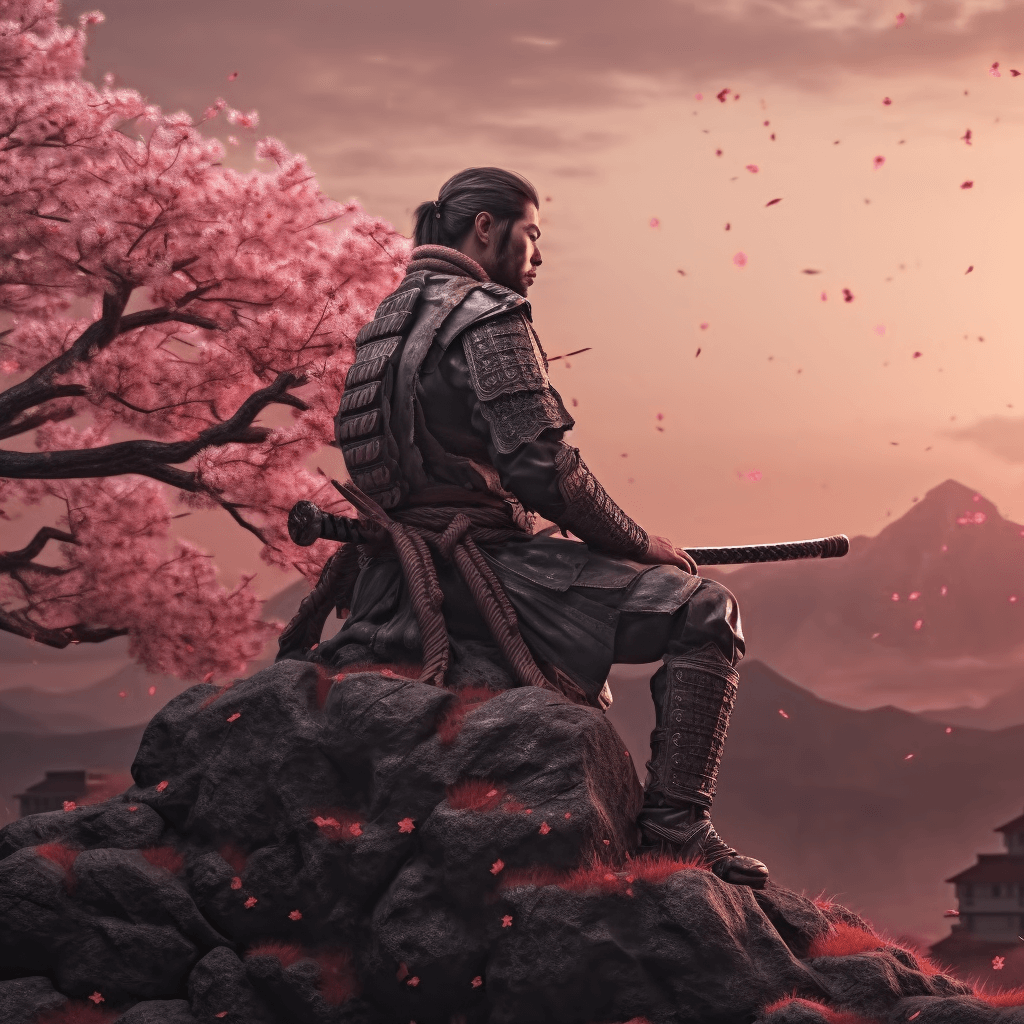
AI generated art using the following text: Japanese samurai fighter meditating on a rocky formation at sunset with cherry blossoming far in the horizon. Intensive, high details, 8k image quality
I arrived in Kyoto in just two hours, thanks to the bullet train’s remarkable speed. Although it isn’t the fastest train in the world, the Maglev in China and the TGV in France hold that honor. Maglev trains are a glimpse into the future of transportation, and works by magnetic levitation. Japan is currently developing its own Maglev, aiming to surpass all speed records. Nevertheless, the bullet train provided exceptional comfort and generous legroom. Despite hearing tales of its stability, I was surprised when my iPad took a free fall from the table. I reached Kyoto shortly before midnight and checked into a modern hotel that offered face recognition technology for check-in and room access. It was undeniably cool not having to worry about carrying a key during my stay there.
I know a lot of you are very cautious with social media and also a lot value their privacy. I am not crazy about privacy and hence you see that I post photos and updates about my trip. Through these posts, a friend of mine, Erick from Brazil, contacted me and said he is traveling with his wife Sandra around Japan. He shared with me their itinerary (a tricky word to spell and to pronounce) and we found that our plans coincide in Kyoto. Erick is one of the smartest people I know. We met around 10 years ago when I started my PhD in Tübingen, Germany where he was also working on his PhD. My professor sent me to him to learn a few things and, since we are also both couchsurfers, we met regularly and our friendship grew over the years. We went often for lunch breaks where Erick would discuss any topic of his abundance, be it about philosophy, religion, sociology or science, and I would play the role of a devil’s advocate and challenge his theories, rather for amusement. We enjoyed these conversations and I missed them since I left Tübingen in 2018. His wife Sandra, is also very intelligent and she started a project on scientifically making certain diets for cancer patients. I was excited when I knew, that we will be exploring Kyoto together.
Kyoto is a relatively small town in comparison to Tokyo or Osaka. The buildings are shorter and life is calmer. We met in the morning of Tuesday the 23rd of May and started by walking in the market while catching up. We updated each other about our whereabouts during the last 3 years. We also exchanged our experiences in Japan so far and started tasting different dishes in the market. Starting from the famous Japanese Wagyu beef, to different sea foods with countless ways to prepare it. I am again and again impressed by the richness and variety of the Japanese cuisine. In the market you would also see unusual shops, for example here you can drink coffee and pet cute animals like puppies or guinea pigs. There you can learn how to forge your own ring. We spent some quality time at the market and decided to head to a bamboo forest, which is one of the beautifully natural things you could see around Japan. We walked among the countless bamboo trees but also countless tourists. Then we found refuge in some garden with a tea-house that were created by Samurai movie-actor. In the shadow of the trees and while sipping green matcha tea and eating traditional sweets, the conversation spanned quantum physics, eastern religions as well as sex 😀 Erick has the capacity to talk for hours uninterruptedly, which is something he and we are aware of. Nevertheless, it was refreshing to have flowing conversations. Living in Germany or in Switzerland, one often feels like you have to beg people for conversations. They are not as talkative as the southern countries for sure. This is why I appreciate my chatterbox friends, not to mention if their talking is rich with content. Over two days in Kyoto, we visited Shinto temples and restaurants. We also went to the neighbourhood where geisha are active and we played the game: ”spot the geisha!” Geisha are highly respected in Japanese society and are regarded as cultural icons. They are skilled in various traditional arts, such as tea ceremony, calligraphy, and playing musical instruments like the shamisen. Beyond their artistic talents, geisha are also trained in the art of conversation and are known for their intelligence and grace. This is why they render any gathering more pleasant and entertaining. This is not something about sex and one can’t simply book a geisha online. You have to have the connections to organise an evening with a geisha and you have to be vouched for.
The food in Kyoto was wonderful. Day after day, I love Japan more and more! I ate not when I was hungry but rather when I was not full. For the smell of this or that restaurant kept flirted with my nostrils in the streets and alleys. Even at midnight, you can go to the traditional Japanese pub, the Izakaya and have a cheap and wonderfully tasting food. The prices here are also comparable to Europe if not slightly cheaper. Tokyo could be a bit pricier but not even close to Zurich. You can easily have a decent meal and a drink for 10 – 15$. I walked a lot in the side streets of Kyoto. For me, everything in Kyoto is cute! I decided to name it Cute-o and I am sure I am not the first to have this idea. The tiny houses, the tiny streets, the tiny cars that I haven’t seen anywhere else in the world, are together painting a beautiful little town. I felt romantic in Kyoto and it will stay in my memory despite the fact that I took only very few photos. What could I do? Every corner I saw something worth of photography and my artistic talents fell short to capture the beauty of the moment. Take my word for it, Japan is beautiful. Someone has to pay me for all of this marketing 😅 On one of the days in Kyoto, we were discussing strategy games. Then Sandra suggested we go to a local “Go” club. This was not a common touristic activity. But Sandra asked the hotel receptionist to call the club and organise a visit. We went there and were welcomed by the instructor before the club members arrive. Erick has already explained the rules to us in advance. The instructor went deeper on the board. He didn’t speak English and we didn’t speak Japanese. So we worked with google translate which has two useful modes. The camera mode, with which you can point the camera on any text and it translates it, and the conversation mode which listen to both of you and translates the conversation in real time with sound output. This worked good enough to manage some kind of conversation and understanding of the game. Slowly, the club members started arriving and they were mostly retired women and less men. I appreciated this social activity for the retired. I think it is useful to have some interest or passion that can fill your life when you aren’t working. Both now and after retirement. My time in Kyoto with Erick and Sandra came to an end on Thursday afternoon. I then took a short train ride to Osaka, a much bigger city full of skyscrapers and glittering LED lights. I spent there almost 24 hours that included a lot of eating as well as one more dance lesson. I met locals and travellers and walked until my feet hurt. I have walked 10-20 km daily since I landed and my brain has been working continuously trying to understand or process the new input everyday. To some extent, I felt saturated and needed to rest my body and my brain. This is why I am glad that I am flying now, on Friday the 26th, to Okinawa, an island far in the south of Japan, which is famous of sandy beaches, equatorial temperatures, and typhoons!
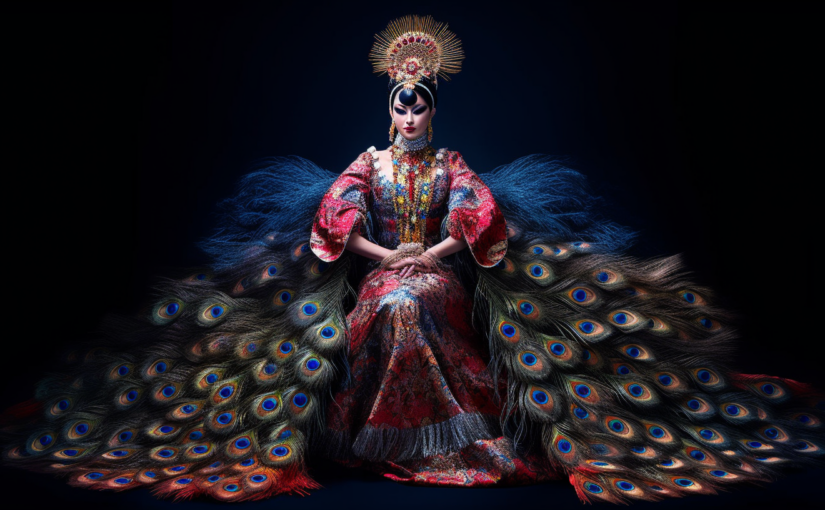
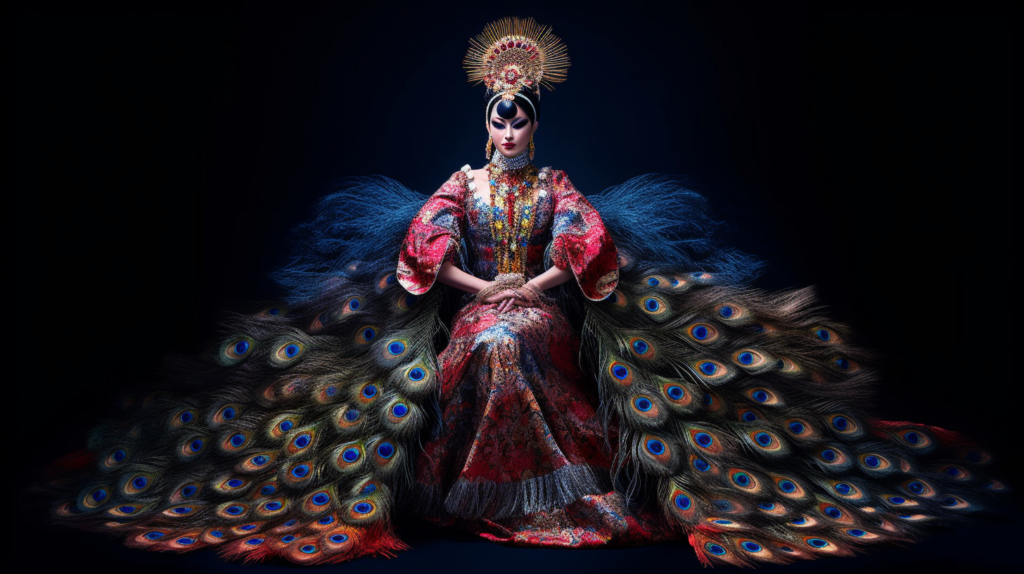
AI Photo of today, using the following text: Peacock as a geisha, full body, feathers, dress, elegant feet, very expressive, eclectic, on a black background, red, white and blue, multiple lights, intensive, Hyper realistic photo, ultra detailed
I did not plan my stay in Tokyo to last for a week! But Tokyo kept on seducing me with things to be seen and things to be done like a skilled lover.
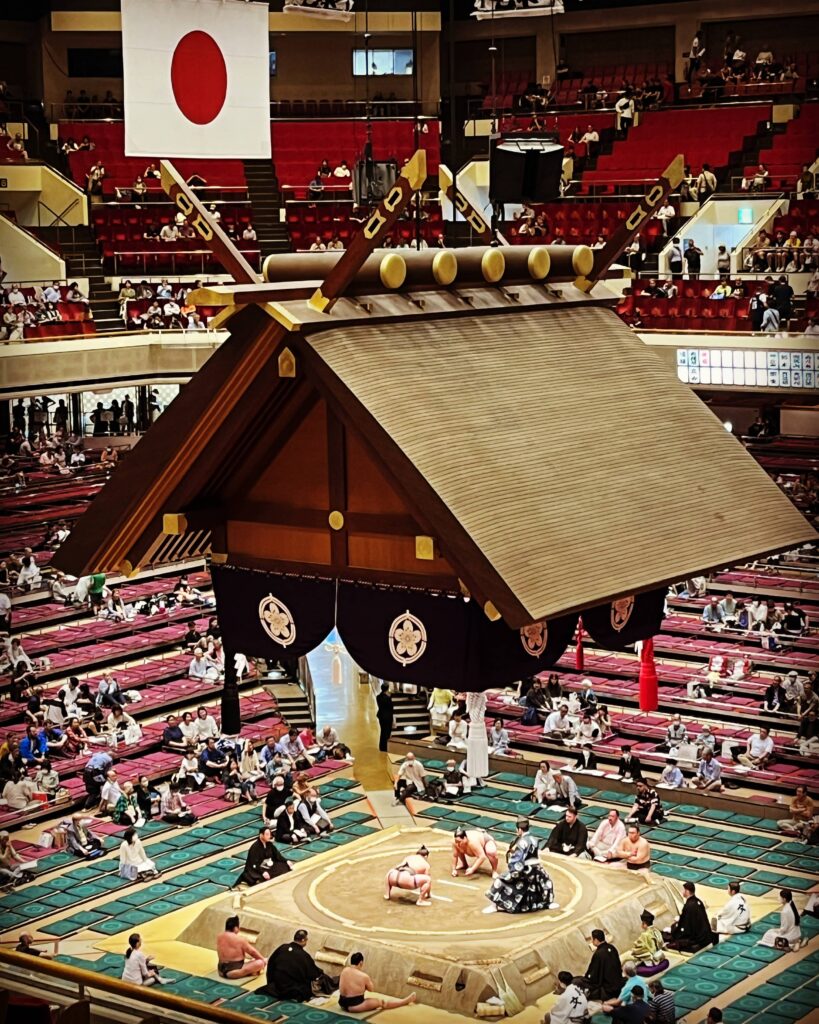
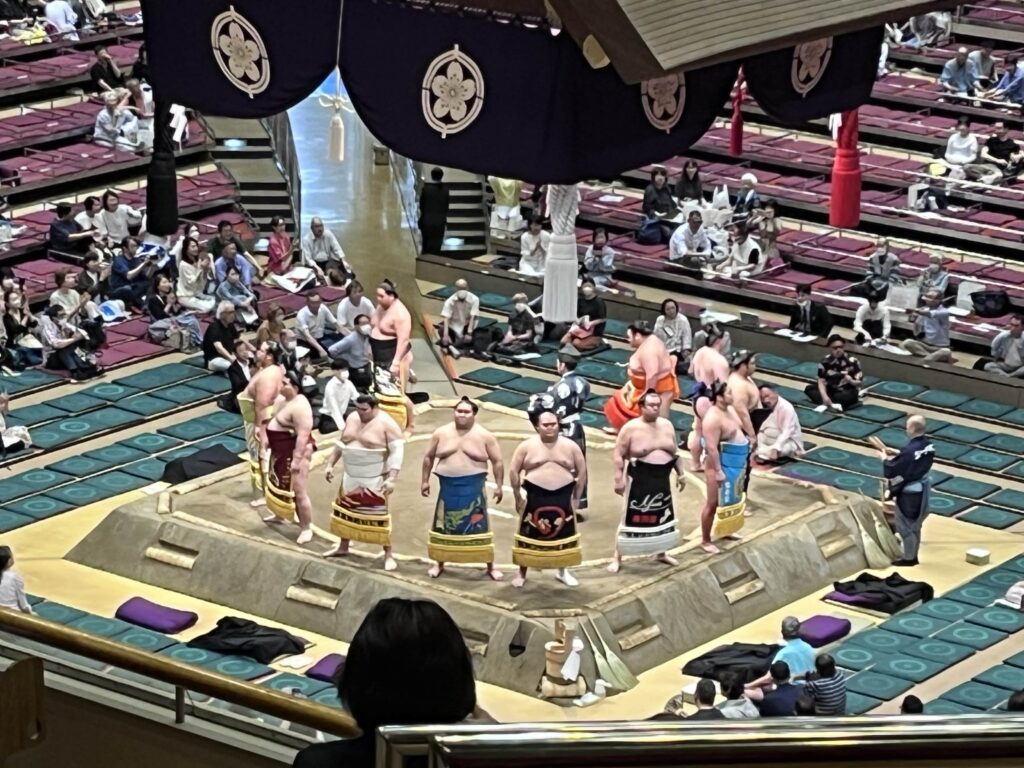
Not lucky enough to catch the cherry blossoming season in Japan, but lucky enough to visit during the grand sumo tournament. Even luckier to manage to buy a ticket from the black market and get it delivered to the hotel. Today, Monday the 22nd of May is the Sumo day.
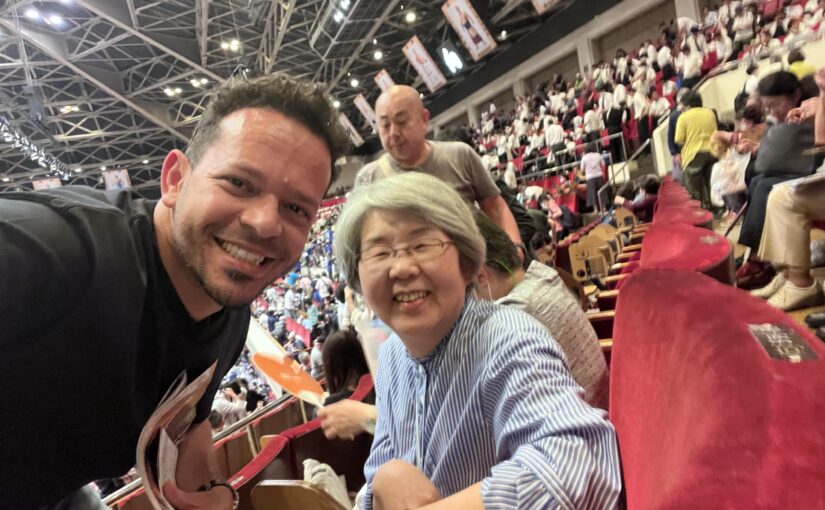
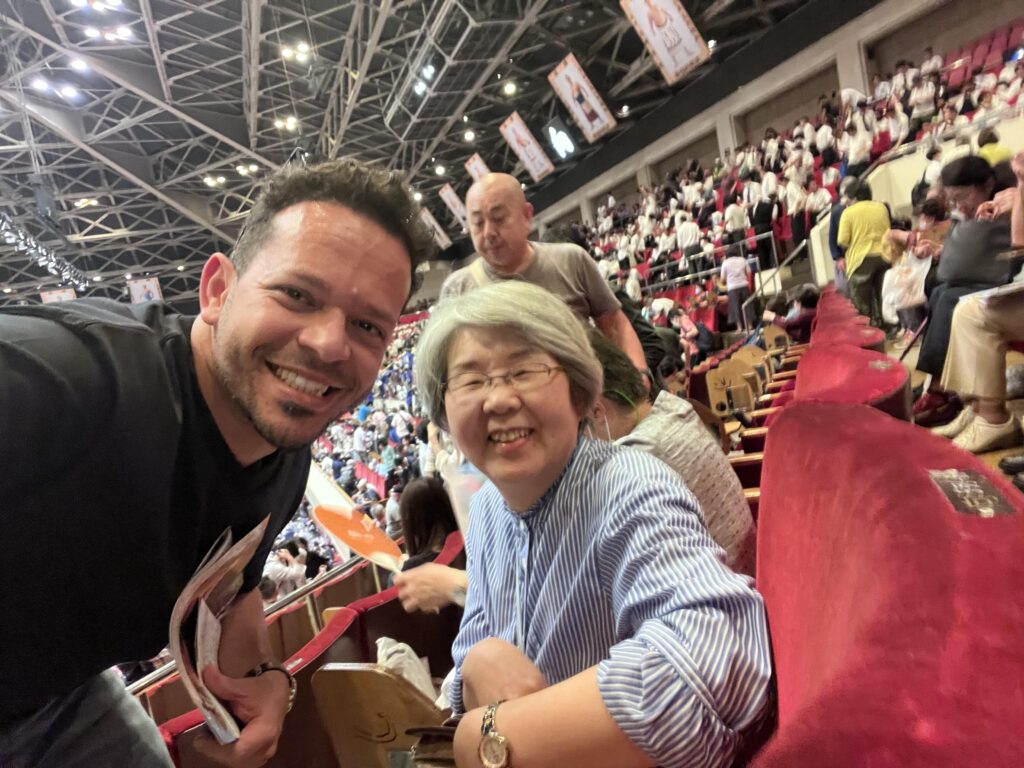
The day of the sumo competition starts at 8:30 in the morning and lasts until around 6:30 pm in the afternoon. It’s divided into three divisions where the beginners level takes place in the morning until around 2 PM where the intermediate level takes place, followed by the advanced professional level. I read online that many people start going in the early afternoon, when the games are more interesting and the wrestlers are more famous. Luckily there was an old Japanese lady who speaks English sitting in front of me and eager to explain everything without sparing any details. I also had no shame in bombarding her with questions about the game and the competition.
There I was sitting, surrounded by a sea of passionate spectators. The roar of the crowd signaled the next match. Before the wrestlers even stepped onto the ring, a series of captivating rituals took place. The rhythmic stomping of the wrestlers’ feet during the ritual and the throwing salt through the air added add an air of mystique to the event.
As the matches started, I thought I would be there just to enjoy the event without much interest. But slowly, I got involved with the matchs, checking the record of the players of the upcoming match and asking my new Japanese old lady friend about why that wrestler is popular. For example, one was much lighter than the rest of the wrestlers, another was climbing the victory ladder very fast, while Asanoyama was just good :). The wrestlers displayed different technique, ranging from brute force to agility and trying to trick the opponent. You lose if you go out of the ring or if you touch the ground with your hand. The lady told me, this is why in the arena they sell only chicken meat, since it stands on two legs and never walks on 4 legs, which would be a loss in sumo! The explosive moments when one wrestler forced the other out of the ring or made them touch the ground were met with thunderous applause, igniting an electrifying energy in the crowd.
You can watch the highlights of the day’s matches here.
Leaving the grand tournament, I felt an overwhelming sense of gratitude for having witnessed this spectacle. This concluded my visit to Tokyo and I then took the direct bullet train to Kyoto, my next destination.
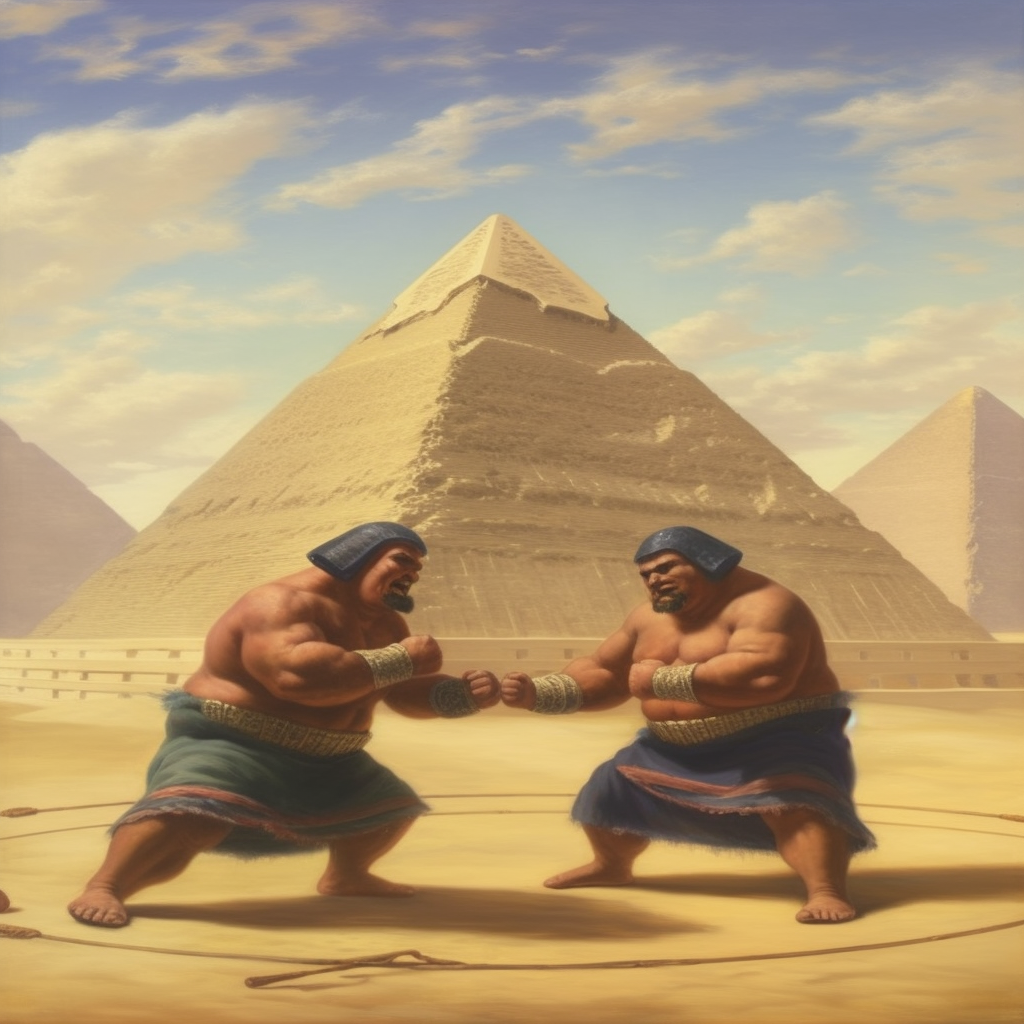
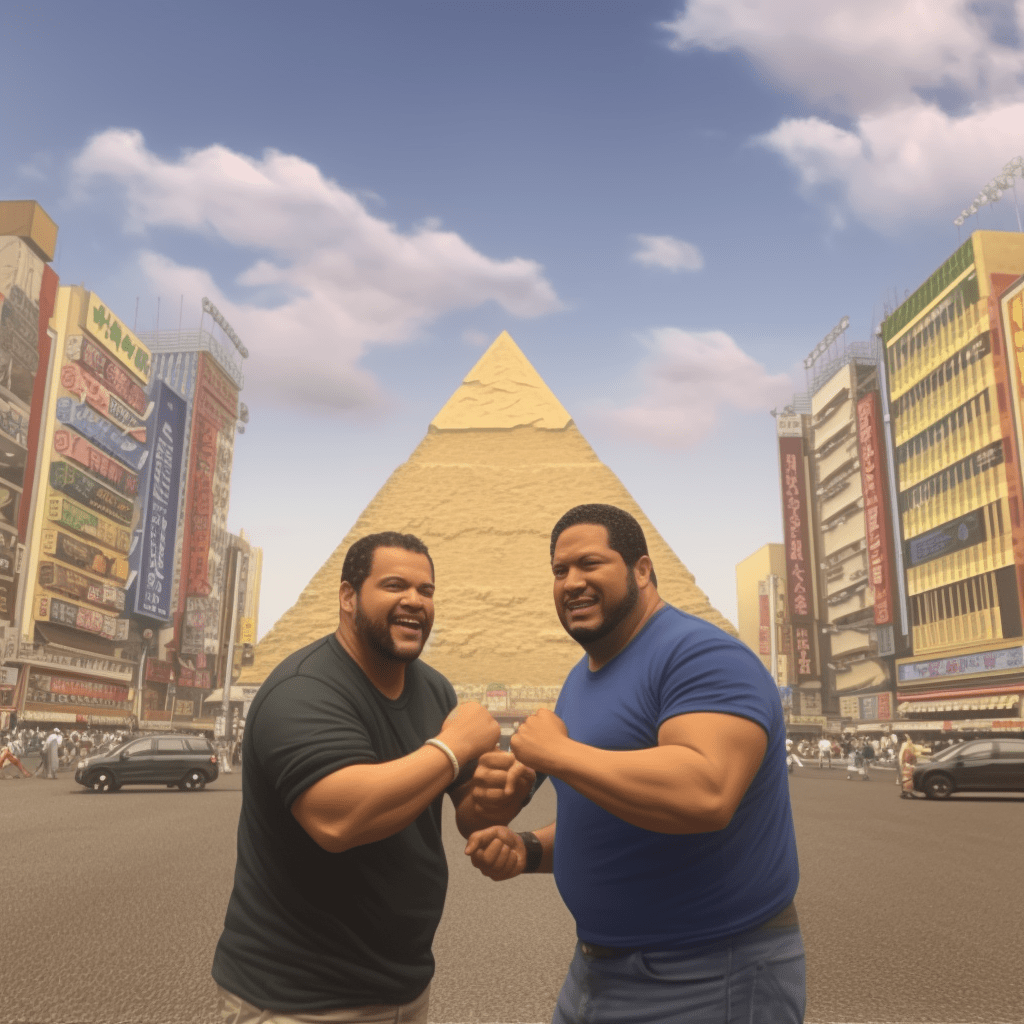
Since I am discovering artificial intelligence a bit more, here is a photo of two ancient Egyptians playing Sumo
AI-generated image of two ancient egyptians wrestling Sumo
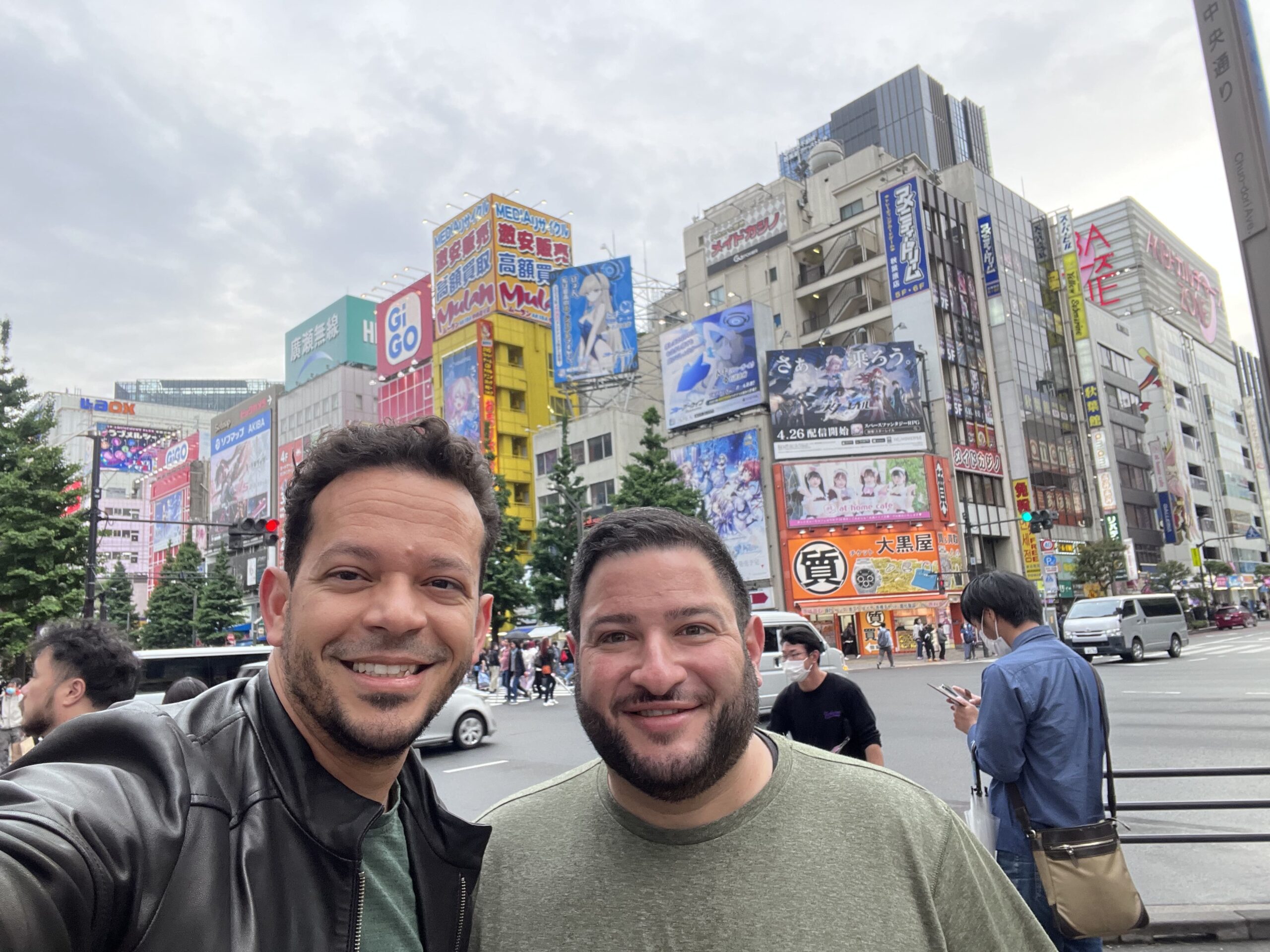
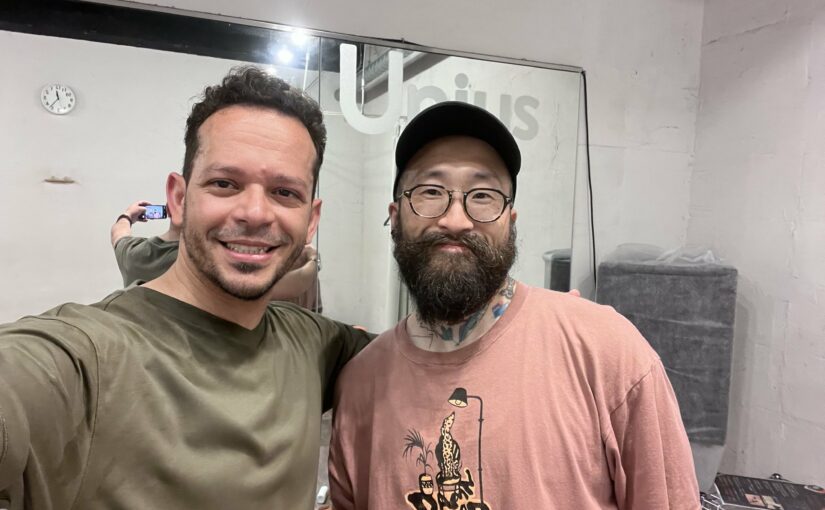
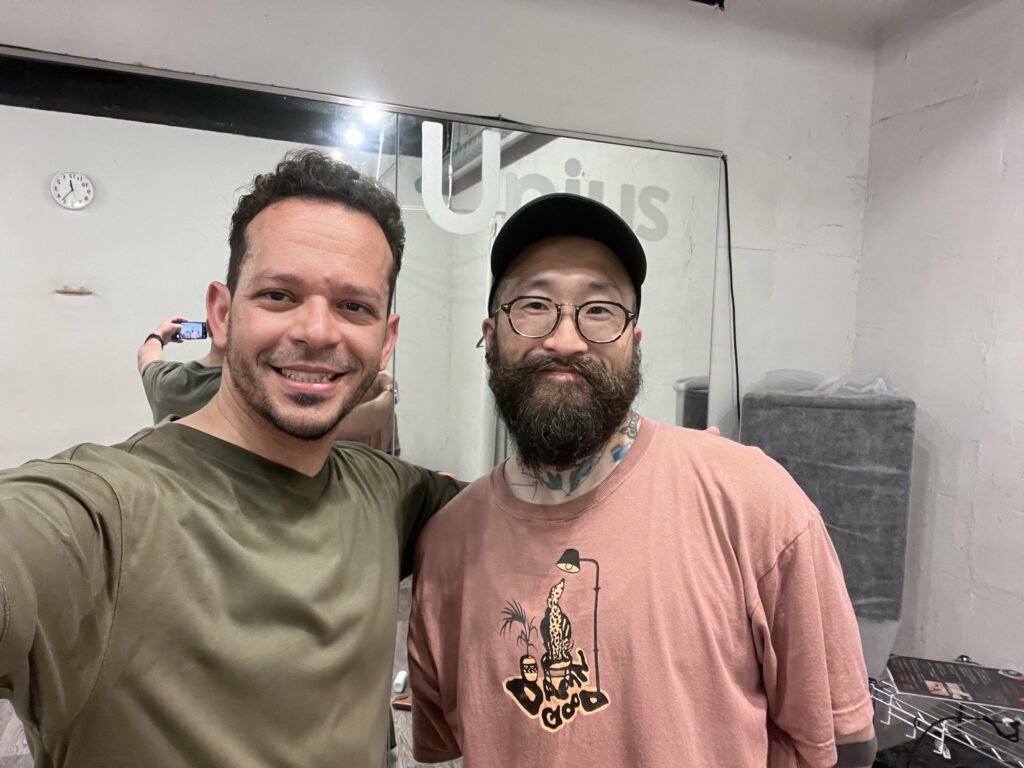
Now if you merge the photo with one of my photos from this trip:
“I rushed from the bed to the shower to the street, determined to make it on time for the dance class I had reserved two days ago. The perks of the internet knowing everything about me are the precise advertisements and suggestions 😂. Two days ago, my Instagram feed reminded me of a dance video I had liked a few weeks ago. I remembered that the dancer was based in Tokyo, so I followed him on Instagram. Yesterday, I saw his story announcing a dance lesson, so I immediately signed up. I arrived a few minutes late because I got lost in the famous busy Shibuya square. The instructor, nicknamed “Boxer,” was already leading the class. There were some Japanese regular dancing students, as well as tourists from the USA and Germany. Boxer began the lesson with easy steps, gradually increasing the difficulty level until only a few could keep up. As the lesson progressed, I realized what made his dance style so special: he could move his hips to one rhythm, his steps followed another rhythm, and his head seemed to beat to a third rhythm. There I was, in the corner, trying to forge a new path in my brain called “multitasking,” a concept I had never excelled at.
Dancing is an incredibly social activity that allows you to connect with other passionate individuals. After the lesson, I joined Boxer, another Japanese dancer, and a group of tourists at a nearby traditional restaurant for lunch. The tourists happened to be two kind-hearted American ladies, who were art professors on a work trip, and a dancer from Germany. We engaged in a lively conversation filled with travel advice from Boxer, creating a light-hearted atmosphere full of fun and laughter.
During our conversation, I mentioned my plan to visit Okinawa. At this point, Boxer warned me about the presence of dangerous sea snakes that occasionally come to the surface to breathe. I responded by expressing concern not about their visibility on the surface, but rather about encountering them while swimming around my lower body. Boxer explained that these snakes pose a threat when they feel attacked while breathing, as their bite can be lethal within a matter of seconds. Naturally, his words left me feeling a bit worried.
A few seconds later, Boxer added, “Also, be careful of the snakes on land; they can also kill you.” I paused, contemplating his words. He then mentioned an interesting addition: “But if you manage to catch one and bring it to the police station, they’ll reward you with 5000 Yens.” I jokingly replied that risking my life for a little more than 30 dollars didn’t sound quite appealing, and besides, I had no clue how to casually catch a snake and deliver it to a police station. Our conversation continued, playfully exploring various hypothetical ways one could die in Okinawa, ironically known as one of the places on Earth where people live the longest (over 100 years). So why meeee?
In the midst of our conversation, Boxer recommended some intriguing dishes for me to try, such as sparrow or turtle! Curious, I inquired about the infamous deadly fish dish called “Fugo.” Boxer’s response was rather blunt: “That can also kill you!” Fugo is a highly toxic fish that, if prepared improperly, can be fatal. Only licensed chefs are allowed to handle it. Boxer shared that, around 200 years ago, many Japanese people lost their lives due to this fish. I couldn’t help but wonder about the determination it took to persistently search for a proper way to cook a toxic fish. How did they test it all those years ago? For example:
“I think I found a way that maybe less toxic, guys do you want to try it?”, then they all die. — “Ops, maybe we should prepare it in another way!”
After this nice encounter, I headed to Asakusa, a neighborhood in Tokyo where one of the biggest religious festivals, called “Sanja Matsuri,” was taking place over the weekend. You can learn more about it here: Sanja Matsuri Wikipedia page. The festival, rooted in the Shinto religion, attracted a multitude of Japanese locals and tourists alike. I couldn’t help but admire the Japanese people wearing traditional kimonos; full of elegance and grace. While I knew I would probably feel out of place wearing one myself, it was a joy to witness the locals embracing their cultural attire.
The focal point of the festival was the procession of moving shrines throughout the neighborhood, eventually making their way to the temple. The shrines were carried by enthusiastic participants who rhythmically shouted and were accompanied by claps from the crowd, creating a lively and energetic atmosphere. As I strolled through the streets, I was amazed by the number of street food stalls, small businesses, and skilled craftsmanship on display. The hustle and bustle of people engaged in various activities added to the charm of the event. It reminded me of the general beauty of large gatherings of people, be it at the cinema, stadium, concert, or even religious ceremonies, where the collective energy and shared experiences contribute to the enjoyment.
After immersing myself in the festivity, I decided to take a lazy walk along the riverside, on my way to one of the tallest towers in the world, the Tokyo Skytree. There, I indulged in a panoramic 360-degree view of Tokyo, hoping to catch a glimpse of Mount Fuji. Unfortunately, the weather wasn’t ideal, but I found a plan B. I savored a small snack in the sky bar, while admiring at the sunset casting its warm blanket over Tokyo.
As the evening unfolded, it was time for El Cafe Latino, a perfect way to cap off the day’s adventures.