Carthage Diaries 02: Kidnapped, Fed, and Welcomed

“Revive me today and kill me tomorrow.”

These are the words of my taxi driver in Tunis. Taxi drivers are a great source of inspiration.

Tunisians are kind and generous. On the street they seem a bit more serious than Egyptians who are joking in any possible situation. I always wonder what events in the history shaped the collective mood of a nation. Whether it is winning/losing a war, or for example works of literature or art that influences everyone.

I visited the Punic and Roman ruins of Carthage, a city of big history that was completely destroyed by the romans. Before that destruction, its general Hannibal marched his army through Spain, crossed the Alps, and spent fifteen years fighting and winning the worst lost battles of the Roman Empire. He marched from the north to Cannae, further than Rome. He did not march to Rome. Nobody knows why.
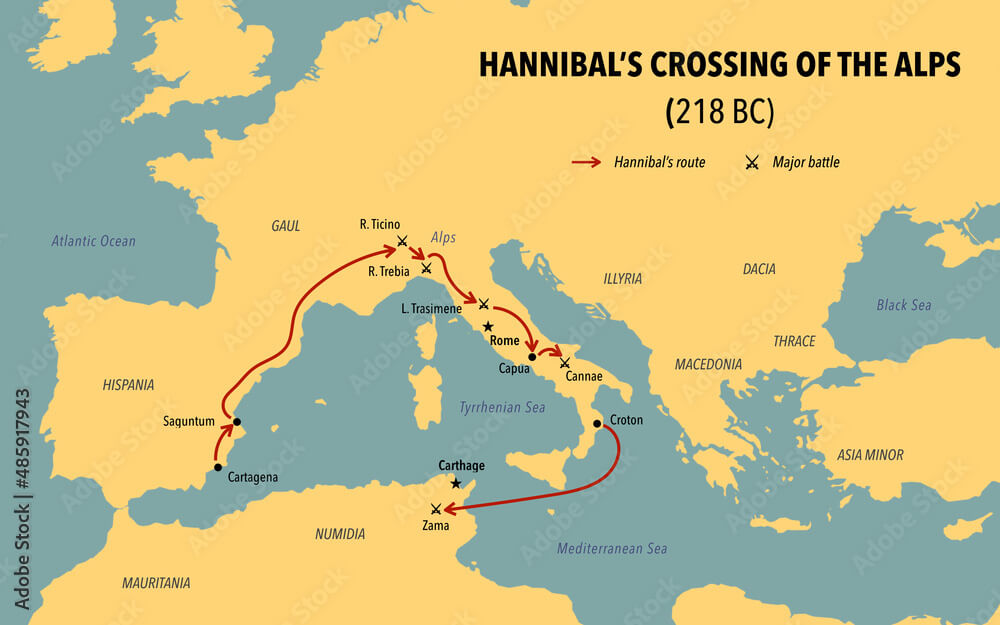

The problem is that we may never know, because the history that survived was written exclusively by the Romans, who later burned Carthage’s libraries with all the books in Carthage. 

Similar to civilisations, unless we document things ourself, what will remain of us is what the others tell about us. I guess this is one reason I am writing here. But also interesting is to imagine, what others would tell about your “civilisation” when you are gone. Probably the truth is distributed between what you think of yourself and what the others think of you. And as. They say, each of us exists differently in every mind that thinks of us. The versions of you that live in your mother’s perception, in a colleague’s, in a stranger’s who watched you once on the metro are not the same person. And none of them is actually you. Neither is what you think is you! We are probably the overlapping region of several Venn diagrams: some of what we believe about ourselves, some of what the others perceive, and what remains true beyond both. I spent a lot of time alone in Tunisia, reflecting and sorting out my thoughts about my life. On the other hand, I have had a few great conversations, specially with Amel, the English language university professor that definitely enriched my perspective on Tunisian lives as well as mine.

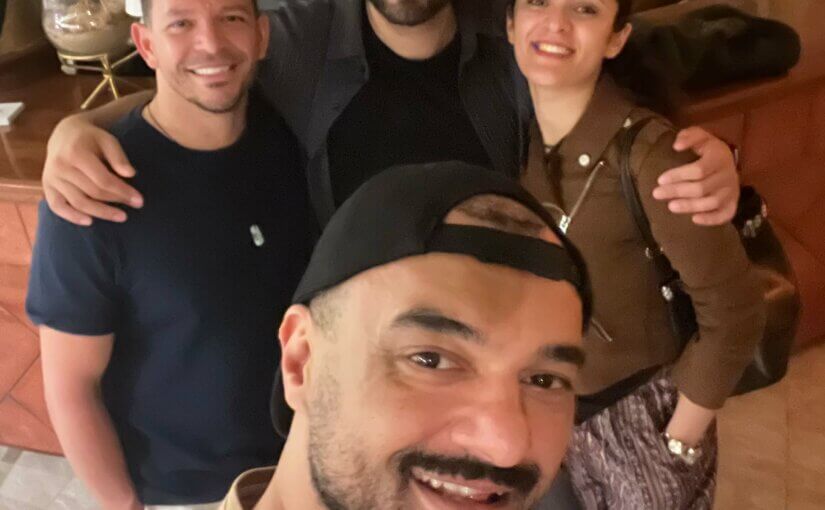
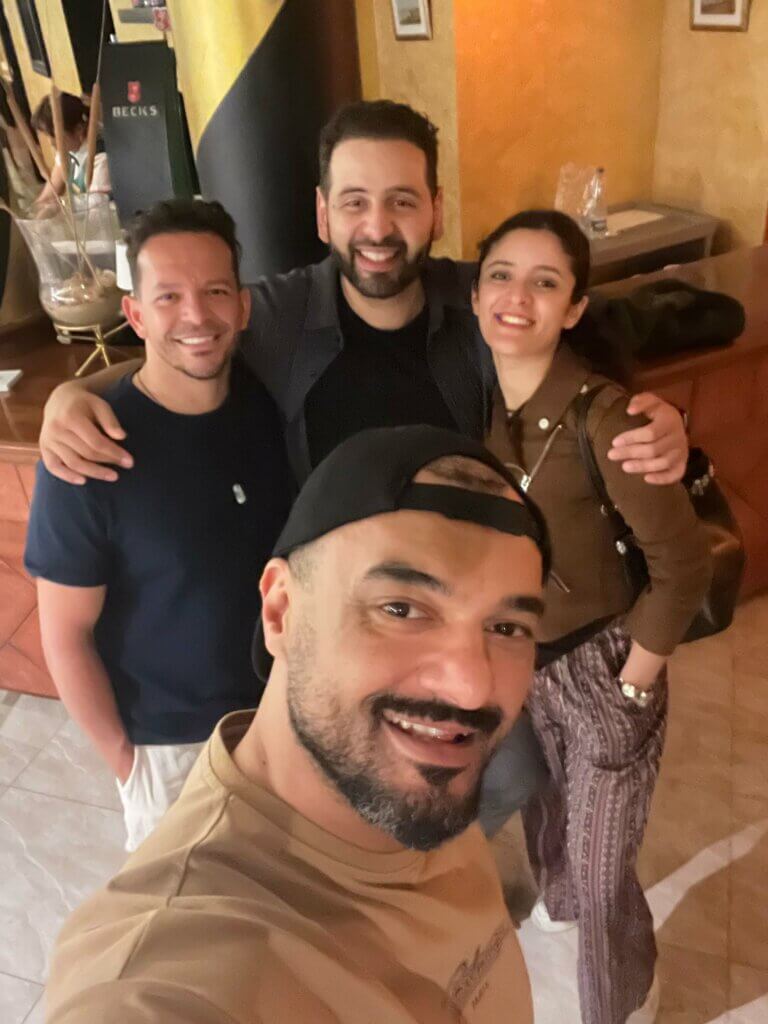
Amel introduced me to many other beautiful souls, Hajer, Omar, Asma and Malak. They were my window into the Tunisian society with their projects and their dreams. They nicely “kidnapped me” after midnight for a late snack at 2:30 am. I have now officially made new friends in Tunisia and will be back one day.
Carthage Diaries 01: Always Negotiate


You are not the same person at the time of planning and the time of doing. You book your holidays with a certain need that might not be there when your trip starts. A core difference between a backpacker and a regular traveler is the versatility adapted to introspection. Plans force you to comply, so you serve the trip instead of the trip serving you. Maybe this doesn’t apply to people with less temperament who maintain a constant state of being (genau). I came to Tunisia after night shifts in the emergency department with a few very sick patients. I needed to eat, sleep and dance.

Living in the developed world rewires you. You get used to the fact that actions have predictable consequences. Do this, get that. The Middle East doesn’t work like this. And that’s its magic. No matter what you do, you cannot predict what happens next.
On my first night, past midnight, a taxi driver was taking me home. As it always does with Tunisian men, the conversation found its way to football, we have a long rivalry between Egyptian and Tunisian clubs. I asked, almost casually, whether any good matches were coming up. One of the strongest derbies in the country was happening the next day. I asked about tickets. He told me it is probably sold out, and then added: you could also just show up at the stadium and tell them you’re Egyptian. I didn’t think that could possibly work.
The next afternoon I approached the stadium to find it ringed by police checkpoints. At the first one, I said I had no ticket, that I was an Egyptian tourist. The officer looked at me and said: you have no chance, but go ahead and try.
Three years ago I would have turned around at the first refusal and gone home. But I had learned something.

Flashback (like in the movies):
In Dubai, my cousin, a young professor of finance, had once talked our way into a fully booked museum. The tickets were sold out, the desk lady said so immediately, and I was already turning to go. But he simply stayed. He explained that we had come from other continents and that this was spontaneous, that we had no chance to wait. He showed zero intention of leaving without a ticket. And then, somehow, the lady did something on her computer and let us in. (End of flashback, heheh)

That memory came back to me at the second checkpoint, where three officers refused me, but one who appeared to be their superior said: actually, why not? Go and try. Tell them you’re Egyptian. So I did. I went to the gate and told the same story one more time. They pointed me toward a man who looked like a mafia boss, talking on the phone, bossy presence, and people slightly lowered their heads when they talked to him. He listened and nodded, and that nod was my ticket to the game.
It was a full 90 minutes of songs, noise, and action. One of the highlights of the trip. And I walked out having learned something I’m still carrying: always negotiate. Even when you think you don’t need to.

I was ironing my shirt in a mediocre hotel in Tunis, thinking about this trip, about the choices I make when I travel, and I realized I consistently choose the unorthodox. Because I want unusual experiences. Experiences tailored to my interests. In a world where we increasingly have less originality, fewer true individual thoughts and more generalized „woke“, very few people have their “special sauce.” Traveling is great for collecting ingredients for your special sauce of personality. The strangeness of the combination you gather from different places is the point.
We don’t invent. We shuffle. Concepts, words, materials, feelings. We rearrange the universe’s existing inventory and call it creation, and we claim it for ourselves. In Tunisia, I found more spices for my sauce.